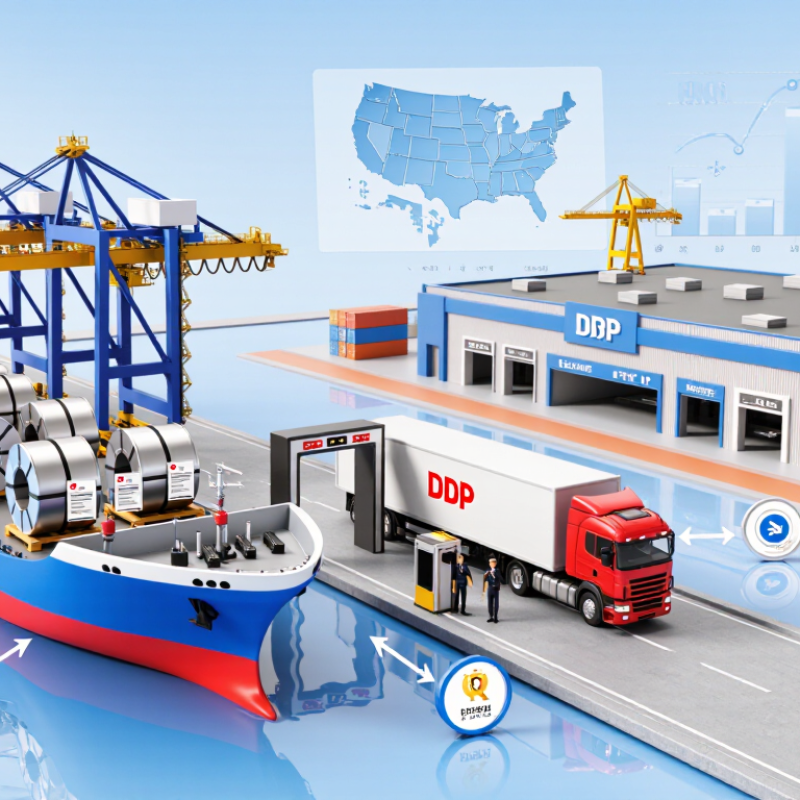
Why Choose DDP Customs Clearance for US Aluminum Products?
For American buyers, US Aluminum Products DDP Customs Clearance can turn a complex delivery into a more predictable purchasing process. The seller manages export procedures, transportation, import entry, customs duties, and delivery to the agreed destination. The buyer sees fewer handoffs. That matters when aluminum coils arrive with mill certificates, packing lists, tariff classifications, and strict weight tolerances.
The market is import-dependent. The U.S. Geological Survey’s Mineral Commodity Summaries 2025 reported that the United States relied on imports for roughly half of its apparent aluminum consumption. The report also highlighted continuing exposure to global supply chains and changing trade conditions. U.S. Census Bureau trade data shows the same practical reality: aluminum products cross borders in substantial volumes every month. Small documentation errors can delay a truck at the port. Sometimes, one incorrect alloy description is enough.
John W. H. Denton, Secretary General of the International Chamber of Commerce, described Incoterms rules as “the world’s essential terms of trade for the sale of goods.” His observation explains the value of a clearly written DDP agreement. However, DDP is not magic. The contract should define the delivery address, tariff code, duty treatment, product standards, insurance responsibility, and evidence of customs payment. Buyers should also verify whether the seller is legally prepared to act as importer of record in the United States. The ICC Incoterms 2020 rules provide structure, but they do not replace professional customs advice. A reliable DDP provider combines documented experience, accurate classification, and transparent landed-cost calculations. That combination can reduce surprises, although it cannot remove every commercial risk.
What DDP Customs Clearance Means for Aluminum Products
DDP customs clearance means the seller manages the aluminum shipment until it reaches the agreed destination. Under DDP terms, the seller usually arranges transportation, export procedures, import clearance, duties, and applicable taxes. The buyer receives the goods with fewer customs tasks. Less paperwork. Fewer surprises.
For aluminum products, accurate information matters from the beginning. The commercial invoice should describe the alloy, product form, dimensions, quantity, and declared value. Customs authorities may also review the product’s tariff classification, country of origin, and supporting certificates. A coil, extrusion, sheet, or billet may require different documentation. Small errors can delay a delivery.
In my experience, DDP works best when both parties confirm responsibilities in writing. The destination should be specific, such as a warehouse address, not simply a country. The agreement should also clarify unloading, storage, inspection fees, and unexpected customs charges. These details are sometimes overlooked. That is a weakness worth admitting. DDP does not remove every risk; it transfers many operational responsibilities to the seller. Buyers should still check product specifications, delivery records, and customs documents before shipment. Clear communication makes the process more reliable, especially when aluminum orders involve multiple sizes, alloys, or delivery dates.
How DDP Handles Import Duties, Taxes, and Customs Documentation
Choosing DDP customs clearance for US aluminum products can simplify the import process. Under Delivered Duty Paid terms, the seller usually arranges transportation, customs entry, import duties, and applicable taxes. The exact responsibilities must appear clearly in the sales contract. DDP is not a magic shortcut.
For aluminum sheets, profiles, or coils, accurate classification is essential. Customs officers may review the product’s alloy, dimensions, finish, and intended use. The commercial invoice should show the correct value, country of origin, product description, and delivery terms. Packing lists and transport documents should match every detail. Small inconsistencies can delay cargo at the port.
The seller or appointed customs specialist normally prepares entry information and coordinates duty payment. In some transactions, the buyer may still need to provide importer details or confirm regulatory information. This point is often overlooked. Duties and taxes also depend on tariff classification, origin rules, and current US requirements. A practical review should happen before production begins, not after the container arrives. Keep copies of invoices, classification support, payment records, and customs communications. These records help resolve questions and reveal weak points in the process. Personally, I would also check whether the quoted DDP price includes storage, examination fees, and unexpected port charges. Cost clarity matters.
Why Choose DDP Customs Clearance for US Aluminum Products?
How DDP Handles Import Duties, Taxes, and Customs Documentation
| Data Dimension | What DDP Means for the Importer | US Customs and Tax Treatment | Required Information or Documentation | Practical Buyer Benefit |
|---|---|---|---|---|
| Incoterms® 2020 Responsibility | The seller arranges delivery to the named destination and assumes responsibility for export clearance, main transport, import clearance, duties, and applicable import taxes. | The seller bears the import-side costs and risks up to delivery at the agreed destination, subject to the exact contract wording. | Purchase contract should clearly state: DDP [named place], Incoterms® 2020. | Provides a clearer landed-cost structure and reduces the number of import tasks handled directly by the buyer. |
| Importer of Record | DDP requires the seller or an authorized party to arrange lawful import clearance in the United States. | The Importer of Record remains responsible for the accuracy of the entry, classification, valuation, and admissibility information submitted to US Customs and Border Protection. | Importer-of-record details, customs power of attorney, importer identification information, and entry instructions. | Reduces administrative work for the buyer, provided the responsible importing party is properly authorized and compliant. |
| HTSUS Classification | The seller or its customs broker should determine the appropriate Harmonized Tariff Schedule of the United States classification before shipment. | Duty rates depend on the specific aluminum product, such as sheet, plate, foil, bar, tube, profile, casting, or finished article, as well as dimensions, alloy, processing, and use. | Accurate product description, alloy and temper, dimensions, composition, manufacturing process, end use, and commercial invoice data. | Improves landed-cost accuracy and lowers the risk of delays, reclassification, or post-entry duty adjustments. |
| Customs Duty | The seller pays the ordinary customs duty included within the agreed DDP price, unless the contract expressly excludes a specific charge. | There is no single duty rate for all aluminum products. The applicable rate is determined by the HTSUS classification, country of origin, and any trade measure in force on the entry date. | HTSUS number, customs value, country of origin, commercial invoice, packing list, and transport document. | The buyer can compare suppliers using a delivered price instead of estimating multiple import charges independently. |
| Section 232 or Other Trade Measures | The seller should identify and price any additional US trade measures that apply to the product and origin. | Aluminum products may be subject to additional tariffs, quotas, exclusions, antidumping or countervailing duties, or other trade remedies. Applicability can change by product, origin, and entry date. | Country-of-origin records, melt-and-pour or related production information where required, exclusion or quota documentation if applicable, and supporting mill records. | Helps prevent unexpected additional duty bills caused by an incomplete origin or trade-remedy analysis. |
| Customs Valuation | The seller provides a defensible customs value and identifies separately stated charges where required. | US customs value is generally based on the transaction value, subject to applicable additions and valuation rules. International freight, insurance, assists, commissions, and other elements may affect the declared value. | Commercial invoice, purchase order, sales contract, freight invoice, insurance details, assists information, and related-party documentation when relevant. | Supports accurate duty calculation and reduces the risk of customs valuation inquiries. |
| Import Processing Fees | Under DDP, agreed import-related fees are normally paid or arranged by the seller. | Potential charges can include the Merchandise Processing Fee, Harbor Maintenance Fee for qualifying ocean shipments, customs broker fees, bond fees, exams, storage, and other carrier or terminal charges. | Entry summary, entry type, shipment mode, customs bond information, broker billing instructions, and carrier documents. | Fewer separate invoices and less risk of cargo being held because a clearance-related charge was not arranged. |
| Federal Import Taxes | The seller handles import charges that are legally assessed at customs and included under the agreed DDP arrangement. | The United States generally does not impose a broad federal value-added tax on imported goods. Import duty and specific fees should not be described as VAT. | Customs entry data, tariff classification, customs value, origin, and supporting entry documents. | Provides a more accurate understanding of the total import cost without incorrectly budgeting for a US import VAT. |
| State and Local Sales or Use Tax | DDP does not automatically determine whether state or local sales/use tax is included in the delivered price. | Sales and use tax is separate from federal customs duty. Liability depends on the buyer’s location, transaction structure, exemptions, and the seller’s tax registration or collection obligations. | Ship-to address, resale or exemption certificate where applicable, tax registration information, and contract terms. | Encourages the buyer to confirm domestic tax treatment separately instead of assuming that DDP covers every US tax. |
| Commercial Invoice | The seller prepares a complete invoice that supports both the sale and the customs entry. | The invoice should show seller and buyer details, product description, quantity, unit price, total value, currency, origin, delivery terms, and the named DDP destination. | Commercial invoice with accurate product descriptions and a clear statement of the agreed Incoterms® rule. | Reduces customs questions caused by vague descriptions, inconsistent values, or missing transaction terms. |
| Packing List | The seller provides shipment-level packing information for customs, transport, and receiving operations. | Packages should be identifiable by marks and numbers, with package count, gross and net weight, dimensions, and product quantities. | Packing list, pallet details, package marks, weights, dimensions, and item references matching the invoice. | Speeds cargo verification and makes receiving aluminum coils, sheets, bars, profiles, or other products more efficient. |
| Bill of Lading or Air Waybill | The seller arranges the principal transport and supplies the transport document needed for delivery and clearance. | The transport document identifies the shipper, consignee, cargo, routing, package count, and freight movement details. | Ocean bill of lading, sea waybill, air waybill, or applicable multimodal transport document. | Improves shipment visibility and coordinates customs release with final delivery. |
| Country of Origin | The seller provides origin information supported by production records rather than relying only on the shipping country. | Origin may affect ordinary duty, marking, quotas, sanctions screening, and additional trade measures. The country of export is not always the country of origin. | Manufacturer declaration, production records, mill certificate, origin statement, and supply-chain records where appropriate. | Helps the buyer assess compliance exposure and avoid incorrect origin declarations. |
| Aluminum Material Records | The seller supplies technical information needed to classify and verify the goods. | Alloy, grade, temper, dimensions, product form, chemical composition, and manufacturing process can influence classification and regulatory review. | Mill test certificate, certificate of analysis, technical data sheet, product drawing, and chemical composition report. | Supports accurate classification, quality verification, and faster responses to customs or customer inquiries. |
| Customs Bond | The responsible importer or broker arranges the bond required for the applicable entry type. | A continuous or single-transaction customs bond may be required to secure duties, taxes, and compliance obligations. | Bond application details, importer information, power of attorney, and entry instructions. | Prevents avoidable clearance delays when a bond is required before entry filing. |
| Customs Examination or Hold | Under DDP, the seller generally manages communication and costs for agreed import clearance events, subject to the contract. | CBP may review documents, inspect cargo, or request additional information. Government exams and storage can extend delivery time and create extra charges. | Complete entry file, product specifications, origin evidence, valuation support, and prompt responses to customs requests. | Centralized handling can reduce the buyer’s involvement during customs queries and inspections. |
| Delivery and Risk Transfer | Delivery occurs at the named destination when the goods are placed at the buyer’s disposal, ready for unloading, under the agreed DDP rule. | Unless otherwise agreed, unloading is generally not included in the seller’s delivery obligation. The contract should define unloading, site access, and appointment requirements. | Named place, delivery appointment, unloading instructions, receiving hours, and site restrictions. | Prevents disputes over who pays for unloading, waiting time, storage, or final-site handling. |
| Landed-Cost Transparency | The seller quotes one delivered price that should identify what is included and excluded. | The written quotation should distinguish product price, transport, duty, customs fees, broker charges, possible trade remedies, domestic taxes, and exceptional costs. | DDP quotation, cost breakdown, validity period, assumptions, exclusions, and adjustment clause for changes in law or tariff rates. | Makes budgeting easier and allows a fair comparison with alternative shipping terms such as DAP or FCA. |
| Compliance Recordkeeping | The seller and responsible importer retain documents supporting the entry and product information. | US customs records generally need to be retained for the period required by applicable customs regulations, commonly at least five years from entry or the relevant activity. | Entry summary, commercial invoice, packing list, transport documents, origin evidence, classification rationale, and payment records. | Creates an audit trail for post-entry reviews, duty corrections, and future shipments. |
| Recommended Contract Control | The buyer should require the seller to identify the customs broker, importer of record, included charges, and escalation process. | DDP does not remove the legal importance of correct entry information or eliminate the possibility of additional assessments if declarations are inaccurate. | Written responsibility matrix, broker contact, document checklist, duty-change clause, claims procedure, and delivery acceptance terms. | Clarifies accountability and reduces the risk that an unexpected customs cost is disputed after shipment. |

Important: Duty rates, trade measures, customs fees, documentation requirements, and tax obligations vary by HTSUS classification, product specifications, country of origin, shipment date, transport mode, and buyer location. Verify the applicable requirements with current US Customs and Border Protection guidance and a qualified customs broker before shipment.
The Step-by-Step DDP Process for Shipping Aluminum to the US
Shipping aluminum to the US under DDP begins with product and compliance checks. The seller confirms alloy, temper, dimensions, weight, and intended use. Each detail supports the correct HTS classification and customs entry. Commercial invoices should show value, origin, quantity, and delivery terms. Packing lists must match the physical shipment. Small mismatches can delay release. This step often feels administrative, but it protects the shipment.
After booking, the seller arranges export clearance and transport to the United States. A customs broker reviews entry data before arrival. The broker may request mill certificates, product specifications, origin records, or tariff documents. Aluminum can face additional duties or trade measures, depending on classification and origin. Therefore, the landed-cost estimate needs careful review. Do not rely on a rough freight quote. The seller pays applicable import duties, taxes, and clearance charges under DDP, subject to the agreed terms and lawful assessment.
At the US port, customs may examine documents or cargo when necessary. Once released, a domestic carrier delivers coils, sheets, or profiles to the named address. The receiver should check packaging, labels, and visible damage before signing. Photos help. In practice, DDP is not effortless. Product changes, incomplete origin data, or unexpected examinations can affect timing and cost. I would confirm storage, inspection, and delivery appointment responsibilities in writing. That extra check prevents many avoidable disputes.
Why DDP Simplifies Cost Control and Delivery Management
DDP Customs Clearance for US Aluminum Products
This matters when products include coils, sheets, profiles, or fabricated parts. Freight charges can change with weight, dimensions, fuel prices, and delivery zones. A DDP quotation should show product value, transport fees, customs charges, taxes, and possible handling costs. Clear line items help purchasing teams compare offers without guessing.
Good documentation remains essential. Accurate product descriptions, quantities, country of origin, and tariff classifications support smoother customs processing. An experienced supplier should review these details before loading. A small error can delay release or create unexpected costs. That risk is often underestimated.
Delivery control also improves under DDP. The seller coordinates the carrier, customs broker, and final-mile appointment. The buyer can track one logistics process instead of several separate tasks. This is useful for warehouses with limited receiving hours or strict unloading rules.
DDP is not flawless. Local storage, inspections, or incorrect delivery details may still create extra charges. Buyers should confirm the destination, unloading responsibilities, insurance scope, and written cost inclusions. A practical review before shipment is less exciting, but it prevents expensive surprises.
Key Risks and Compliance Checks When Choosing DDP Shipping
Why Choose DDP Customs Clearance for US Aluminum Products?
Key Risks and Compliance Checks When Choosing DDP Shipping
DDP shipping can simplify aluminum imports into the United States. The seller usually arranges transport, customs entry, duties, and delivery. Yet DDP does not remove compliance responsibility from the transaction. Before ordering, confirm who acts as the importer of record. That party remains responsible for accurate declarations and supporting records.
Check the aluminum product’s HTS classification, declared value, country of origin, and manufacturing process. Small differences matter. Alloy composition, dimensions, finishing, and intended use may affect classification. Review commercial invoices, packing lists, certificates of origin, and mill test reports. Do not accept vague descriptions such as “metal parts.” Customs officers need measurable details. Duties may also include additional trade remedies, depending on the product and origin. Rates can change.
Ask the shipping provider for a written duty calculation before shipment. Confirm whether customs bonds, examination fees, storage, and port charges are included. A low DDP quote can hide these costs. It happens.
Product compliance deserves separate attention. Aluminum components used in construction, food contact, transportation, or electrical equipment may require specific standards or technical documents. Keep test reports consistent with the shipped model and material grade. Check that labels, packaging, and safety information match US requirements.
One practical weakness is overtrusting the seller’s customs agent. Their documents may look complete while the classification remains uncertain. Independent review is worthwhile for unusual alloys, mixed-material products, or large shipments. Keep records for the required period, and correct errors promptly instead of repeating them.
Article Source:
At Premium PSU, we are specialists in designing and manufacturing power conversion systems for the industrial market. Our product range includes high reliability power supplies from 50W to 72kW.
PREMIUM PSU
C/ Dolors Aleu, 19-21, 2nd Floor
08908 – Hospitalet de Llobregat
Barcelona-SPAIN
t.+34 93 223 26 85