What Are China’s Top Silicon Nitride Suppliers?
China’s silicon nitride market is expanding across bearings, semiconductor equipment, cutting tools, engine components, and advanced ceramics. Yet identifying the top suppliers requires more than checking production volume or website claims. Buyers must examine powder purity, α-to-β phase control, oxygen content, sintering capability, dimensional consistency, and inspection records. A supplier may perform well in bearing balls but struggle with semiconductor-grade components. The difference can appear under a microscope, or after thousands of operating hours.
Professor I-Wei Chen, a respected ceramic materials researcher, has described silicon nitride as “a remarkable material with a unique combination of properties.” That combination includes low density, strong thermal-shock resistance, electrical insulation, and reliable performance under demanding temperatures. His observation explains why Chinese manufacturers compete across several specialized segments, rather than selling one universal product.
This guide examines leading Chinese suppliers by material expertise, manufacturing scale, export experience, and quality transparency. It considers companies producing powders, ceramic balls, structural parts, and customized components. Certifications matter, but they do not tell the whole story. A clean certificate cannot replace stable batch data, clear tolerances, and responsive technical support. Some supplier rankings also remain imperfect because pricing, capacity, and customer references often change quietly. That uncertainty deserves attention.
The strongest supplier depends on the application. A laboratory may need ultra-fine powder and traceability. A bearing producer may prioritize roundness and fatigue life. A semiconductor manufacturer may demand strict contamination control. This comparison aims to make those differences visible before a purchasing decision becomes expensive.
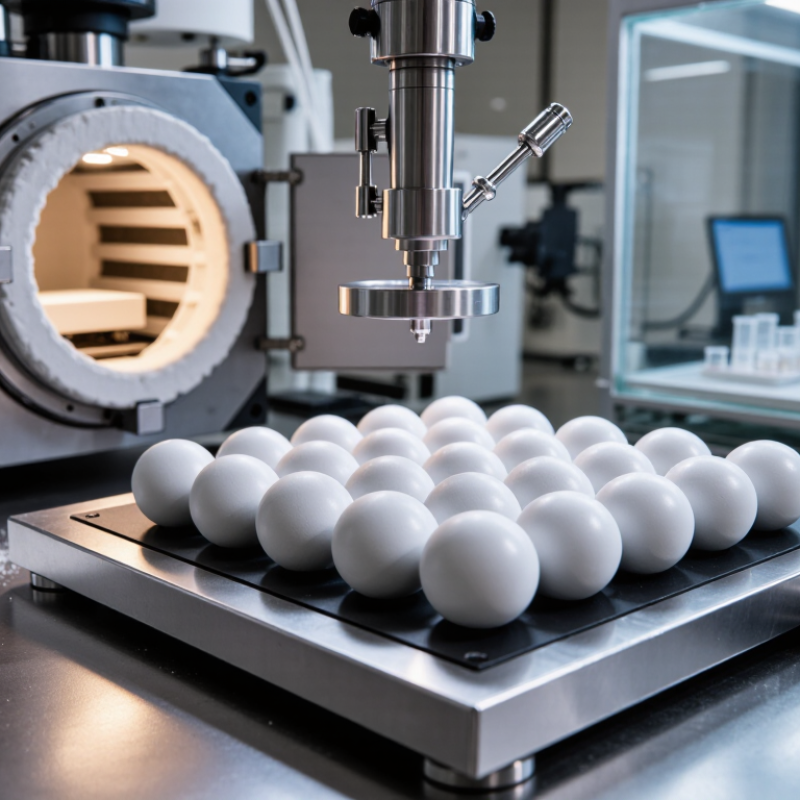
China’s Silicon Nitride Industry: Definition, Types, and Main Applications
China’s silicon nitride industry serves demanding applications in electronics, machinery, energy, and advanced ceramics. Silicon nitride is a high-performance ceramic known for low density, strong thermal shock resistance, and excellent wear resistance. It appears as powder, reaction-bonded ceramic, hot-pressed parts, and injection-molded components.
Market definitions vary widely. Grand View Research estimated the global silicon nitride market at over USD 100 million in 2023, with steady growth expected through 2030. Other industry reports show much larger figures because they include related ceramic components and finished assemblies. This difference deserves attention. Chinese suppliers commonly compete through powder purity, particle-size control, sintering capability, and customized machining. Their products support semiconductor equipment, bearings, engine components, cutting tools, and high-temperature electrical insulation. Automotive and electronics demand remain important growth drivers.
Tips: Ask for batch-level purity data, oxygen content, density, bending strength, and thermal-shock results. Check whether testing follows recognized standards. A low quoted price may hide higher machining loss or inconsistent shrinkage. Pilot testing is safer than relying on a catalogue alone. In practice, supplier comparisons can feel unclear because product grades are not always directly comparable. That is a real weakness. Procurement teams should review technical data, production experience, inspection records, and delivery stability together.
China’s Silicon Nitride Industry: Types, Applications, and Supplier Landscape
This chart compares the typical density ranges of major silicon nitride ceramic types used in industrial supply chains. Reaction-bonded silicon nitride generally has lower density because of residual porosity, while pressureless-sintered, hot-pressed, and gas-pressure-sintered grades are denser and commonly selected for bearings, cutting tools, engine components, semiconductor equipment, and high-temperature applications.
Values are representative industry ranges in g/cm³; actual specifications vary by powder quality, additives, forming method, and sintering conditions.
Key Factors for Evaluating China’s Silicon Nitride Suppliers
Choosing China’s top silicon nitride suppliers requires more than comparing prices. Product fit comes first. Check purity, crystal phase, particle size, oxygen content, and powder morphology. These properties affect sintering, strength, thermal shock resistance, and surface finish. Ask for recent certificates of analysis, not recycled documents. Good suppliers should explain testing methods clearly.
Production experience also matters. Review batch records, raw material controls, equipment maintenance, and traceability procedures. A capable supplier can provide test data from several production lots. Look for X-ray diffraction, chemical analysis, particle-size testing, and microscopy results. Quality systems help, but paperwork alone proves little. A polished website proves less.
Communication is another practical test. Can the technical team answer questions about forming methods, additives, storage, and firing conditions? Request a small sample before signing a large order. Compare its color, flowability, particle distribution, and laboratory performance with the specification. Confirm packaging strength and moisture protection, especially for long-distance shipping. Export documentation should be accurate and consistent.
Cost deserves careful review. A low quotation may hide unstable yields, weak packaging, or limited technical support. Supplier audits can reveal these gaps. Still, audits are imperfect and may miss problems between visits. Use clear acceptance criteria, retained samples, and agreed corrective-action procedures. Reliable sourcing depends on evidence, repeated communication, and a willingness to question convenient answers.
Leading Chinese Suppliers of Silicon Nitride Materials and Products
China’s silicon nitride supply base covers powders, ceramic components, sputtering targets, and coating materials. Suppliers serve semiconductor equipment, photovoltaics, bearings, cutting tools, and high-temperature engineering. Their capabilities differ sharply. Some focus on high-purity powder, while others specialize in reaction-bonded or hot-pressed ceramics.
Market data explains the strong domestic demand. The IEA Photovoltaic Power Systems Programme reported that China added about 216.9 GW of solar capacity in 2023. Silicon nitride films support passivation and anti-reflection processes in many solar cell designs. Grand View Research estimates the global silicon nitride market will expand steadily through 2030, with demand supported by electronics and advanced ceramics. These figures are useful, but report definitions vary. Powder, finished parts, and coating markets are not always counted together.
A practical supplier review should examine purity, particle-size control, oxygen content, density, strength, and thermal-shock performance. Ask for batch certificates and independent testing. For precision ceramics, inspect dimensional tolerance and surface finish after machining. For photovoltaic materials, evaluate deposition stability and consumption per wafer. Production experience matters. A supplier may quote an attractive price yet lack stable export packaging or traceable process records. That weakness is easy to miss. Chinese manufacturers with pilot lines, technical laboratories, and documented quality systems usually offer better scaling potential. Still, published data cannot replace sample testing under the buyer’s actual temperature, pressure, and chemical conditions.
How to Select the Right Silicon Nitride Supplier in China
Choosing a silicon nitride supplier in China requires more than comparing prices. Match the material to your application first. Check purity, density, hardness, fracture toughness, thermal conductivity, and operating temperature. A supplier for ceramic bearings may not suit furnace components or electrical insulators. Request a current technical data sheet, inspection report, and sample before discussing large orders. Small details matter, such as surface finish and dimensional tolerance.
Tips: Ask for batch traceability, production capacity, and quality-control procedures. Confirm whether testing is performed in-house or by an independent laboratory. Review packaging carefully. Silicon nitride parts can arrive damaged when separators, moisture control, or shock protection are weak. Also clarify lead times, minimum order quantities, tooling charges, and export documentation in writing. Clear communication is a practical quality signal.
Visit the factory when the project is important, or arrange a live video inspection. Look for clean processing areas, calibrated equipment, documented inspections, and technicians who explain defects honestly. A reliable supplier should discuss limitations, not promise perfection. No supplier is perfect. I would also compare two or three qualified manufacturers using the same drawing and test requirements. This reveals differences in consistency, response time, and engineering support. A low quote may hide unstable tolerances or expensive rework. Select the supplier that can repeatedly meet your specification, not merely the one offering the fastest answer.