
How to Choose the Right DC DC Power Supply for Your Needs?
Choosing the right DC DC power supply is critical for various applications. According to a report from MarketsandMarkets, the DC-DC converters market is expected to reach USD 6 billion by 2025. This growth highlights the increasing reliance on efficient power management systems in numerous industries.
Selecting the appropriate DC DC power supply requires understanding your specific needs. Factors like voltage requirements, efficiency ratings, and load characteristics play a crucial role. A mismatched power supply can lead to inefficiencies or even damage your devices. Preliminary research can help clarify your preferences and technical specifications.
It’s essential to consult with industry experts and explore different options. Product reviews and technical datasheets provide valuable insights. Make sure to consider potential drawbacks in available models. Some supplies may lack customizable options or adequate thermal performance. Reflecting on these aspects can lead to a well-informed decision in your quest for the right DC DC power supply.
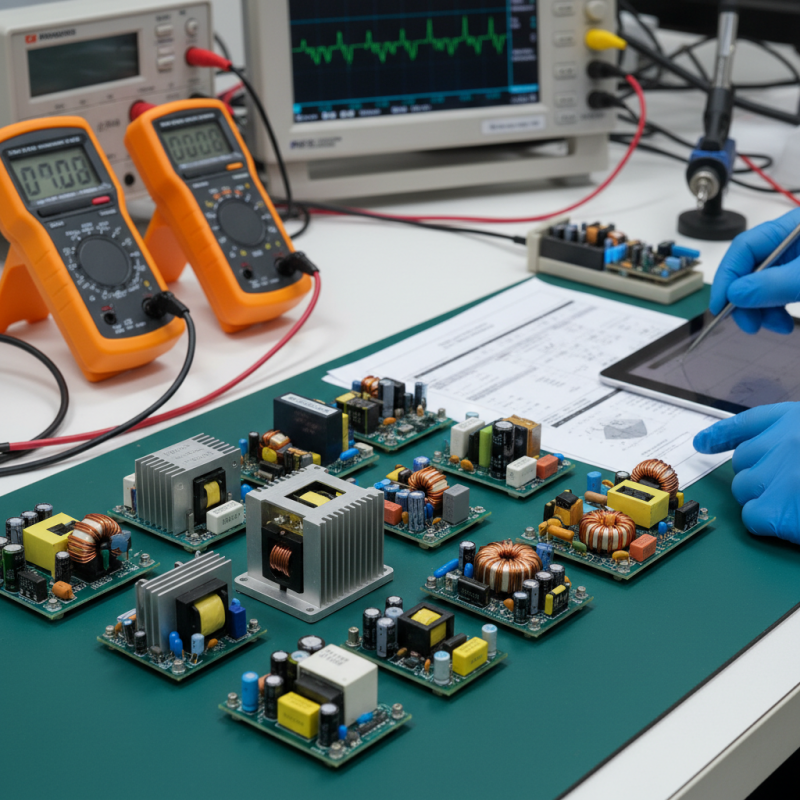
Understanding the Basics of DC-DC Power Supplies
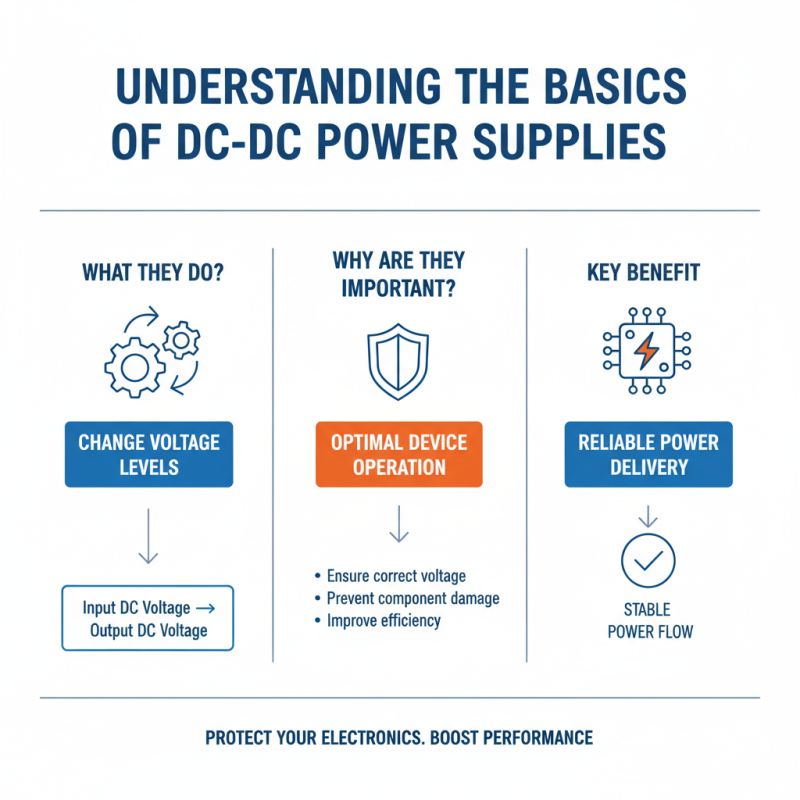
When selecting a DC-DC power supply, understanding the fundamentals is essential. DC-DC converters change voltage levels to meet specific needs. They ensure devices operate properly within their voltage range. This is vital for electronics, where voltage fluctuations can damage components or lead to inefficiency.
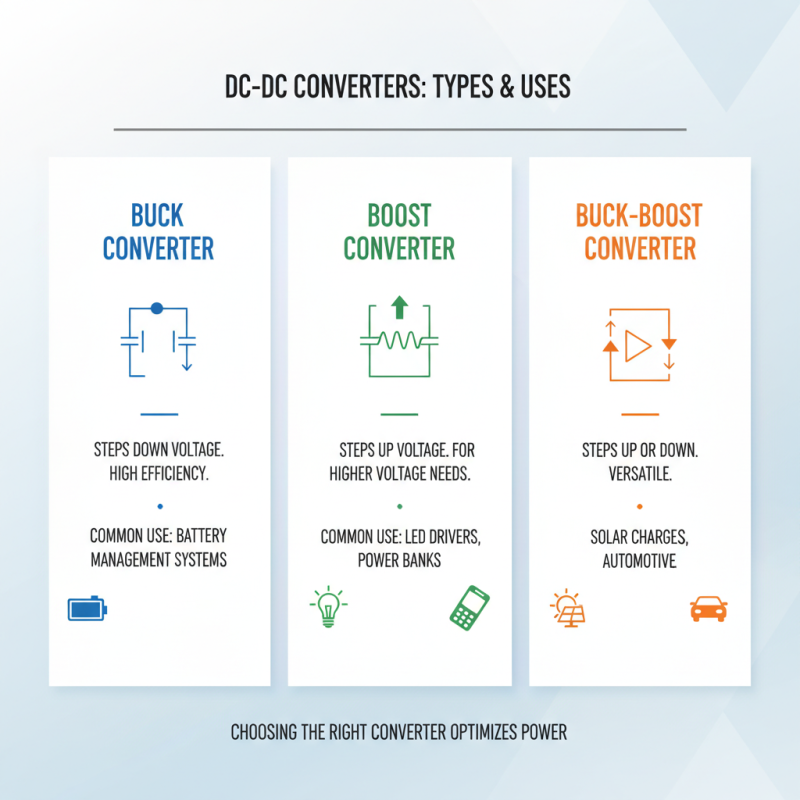
Different types of DC-DC converters exist, such as buck, boost, and buck-boost. A buck converter lowers the voltage, while a boost converter raises it. In contrast, a buck-boost converter can function in both ways. Each type serves unique applications. Knowing the intended application helps narrow down choices.
When evaluating options, consider output voltage, current ratings, and efficiency. It’s easy to overlook efficiency ratings, yet they directly impact energy consumption. Reflecting on your power needs is crucial. Often, users may choose based on immediate requirements, failing to account for future scalability. Proper research and understanding help ensure you select a reliable, suitable power supply for your demand.
Key Factors to Consider When Selecting a DC-DC Power Supply
Selecting the right DC-DC power supply involves various factors. One crucial element is the input and output voltage range. According to a recent industry survey, about 70% of engineers prioritize voltage specifications when making decisions. This ensures compatibility with the overall system architecture. If the voltage specifications are off, it may lead to system failure.
Another important consideration is the efficiency ratings. The average efficiency for modern DC-DC converters hovers around 85-90%, as reported by industry studies. Higher efficiency translates into less heat generation and energy loss. However, achieving high efficiency can require complex circuit designs. Therefore, it's vital to balance efficiency with manufacturing costs and complexity.
Thermal management should also be addressed. Many engineers overlook this aspect. Inadequate heat dissipation can shorten the lifespan of components. About 40% of power supply failures are attributed to overheating issues. Proper thermal management involves adequate airflow and heat sinks. This may seem straightforward, but the execution is often flawed in practice. Paying attention to these details can significantly enhance reliability and performance.
How to Choose the Right DC-DC Power Supply for Your Needs? - Key Factors to Consider When Selecting a DC-DC Power Supply
| Factor | Description | Considerations |
|---|---|---|
| Input Voltage Range | The range of input voltages the power supply can accept. | Ensure compatibility with your application voltage. |
| Output Voltage | The voltage level output required for your device. | Check if the output voltage is adjustable or fixed. |
| Output Current | The maximum current the power supply can deliver. | Verify if the output current meets the requirements of your load. |
| Efficiency | The ratio of useful power output to total power input. | Higher efficiency reduces heat and power loss. |
| Size and Form Factor | Physical dimensions and layout of the power supply. | Ensure it fits within the design constraints of your application. |
| Thermal Management | How the power supply manages heat dissipation. | Consider the cooling solutions required for your setup. |
| Protection Features | Built-in protections against overload, short circuit, etc. | Essential for safe operation and longevity. |
| Cost | The total price of the power supply. | Balance between performance and budget constraints. |
Identifying Your Application Requirements for Power Supply
When choosing a DC-DC power supply, start by identifying your application needs. Different devices require varying power levels and voltage ranges. Consider your load's voltage and current demands carefully. A small sensor may need only a few watts, while larger systems could require hundreds. Understanding these specifications helps in selecting a suitable power supply.
Next, evaluate the efficiency requirements. High efficiency can minimize thermal issues and energy costs. If a device operates in a confined space, heat dissipation becomes critical. Look for power supplies with good thermal management features. Sometimes, a less efficient supply might seem cheaper but could generate too much heat. This heat can lead to system failures. Always weigh the trade-offs between cost and performance.
Lastly, think about the environment where the power supply will function. Extreme temperatures, humidity, or vibration can affect reliability. Ensuring the right enclosure and protection can save you headaches later. Consider potential future needs as well. Flexibility in output specifications may save you from needing additional units down the line. These reflections can guide you to a suitable choice that meets current and future demands.
Evaluating Output Voltage and Current Specifications
Choosing the right DC-DC power supply requires careful consideration of output voltage and current specifications. Understanding these parameters is crucial for optimal performance in your application. The output voltage should match your device's requirements. A mismatch can lead to underperformance or damage. For example, a 5V device needs a supply that consistently delivers 5 volts. Even slight deviations can cause issues.
When it comes to current specifications, this is equally important. You should choose a power supply that can provide the necessary current for your application. Insufficient current can lead to voltage drops and system instability. Check the maximum current draw of your device to ensure compatibility. A power supply that exceeds your needs can also generate excess heat.
Tips: Always measure your device's actual current demand during operation. This helps prevent choosing a supply that's too small or excessively large. Additionally, consider the efficiency rating of the power supply. Higher efficiency results in less wasted power and heat. Lastly, don't overlook variations in load conditions; your chosen supply must be adaptable to changing demands.
Comparing Different Types of DC-DC Converters and Their Uses
Choosing the right DC-DC power supply can be challenging. Different types of DC-DC converters serve various applications. Buck converters, for instance, are efficient in stepping down voltage. They are widely used in battery management systems, where voltage needs to decrease without significant power loss.
Boost converters, on the other hand, are ideal when an increase in voltage is necessary. These converters find their place in solar power systems, where optimizing energy output is crucial. Sometimes, they can produce voltage levels higher than the supply, which is useful in certain device applications.
Then, there are buck-boost converters, which combine the functions of both. They can either step up or step down voltage, offering flexibility. However, they may introduce complexity and may not always be the most efficient choice. Evaluating the specific requirements of your project is vital. Understanding load conditions and efficiency standards can help in making the best choice, even if it feels overwhelming. Always consult technical specifications and datasheets for accurate information.
Related Posts
-
10 Digital Tips for Optimizing Efficiency in DC DC Power Supply Systems
-
Understanding DC Power Supply: Key Components and Their Impact on Modern Electronics
-
Understanding the Advantages of Using DC Power Supply in Modern Electronics
-
Innovative Applications of DC to DC Converters in Modern Electronics
-
5 Proven Reasons High Voltage DC DC Converters Are Essential for Modern Power Systems
-

Why DC Supply is Essential for Modern Electronic Devices and Applications

At Premium PSU, we are specialists in designing and manufacturing power conversion systems for the industrial market. Our product range includes high reliability power supplies from 50W to 72kW.
PREMIUM PSU
C/ Dolors Aleu, 19-21, 2nd Floor
08908 – Hospitalet de Llobregat
Barcelona-SPAIN
t.+34 93 223 26 85