
How to Choose the Right Stainless Screws for Your Project?
Choosing the right Stainless Screws for your project can be a daunting task. As industry expert John Smith wisely states, "The right screws make all the difference in durability and performance." This highlights the importance of understanding various types of stainless screws and their specific applications.
Stainless screws come in various grades and finishes, which can affect corrosion resistance and strength. Selecting the wrong type can lead to costly repairs and compromised project integrity. Pay attention to factors like environment and load-bearing requirements. For instance, marine environments demand higher corrosion resistance than typical indoor applications.
Investing time in your choice is crucial. Explore options carefully and evaluate your project's needs. Remember, not all stainless screws are created equal, and the smallest detail can influence overall success. Mistakes can occur, and reflecting on your choices will enhance future decisions.
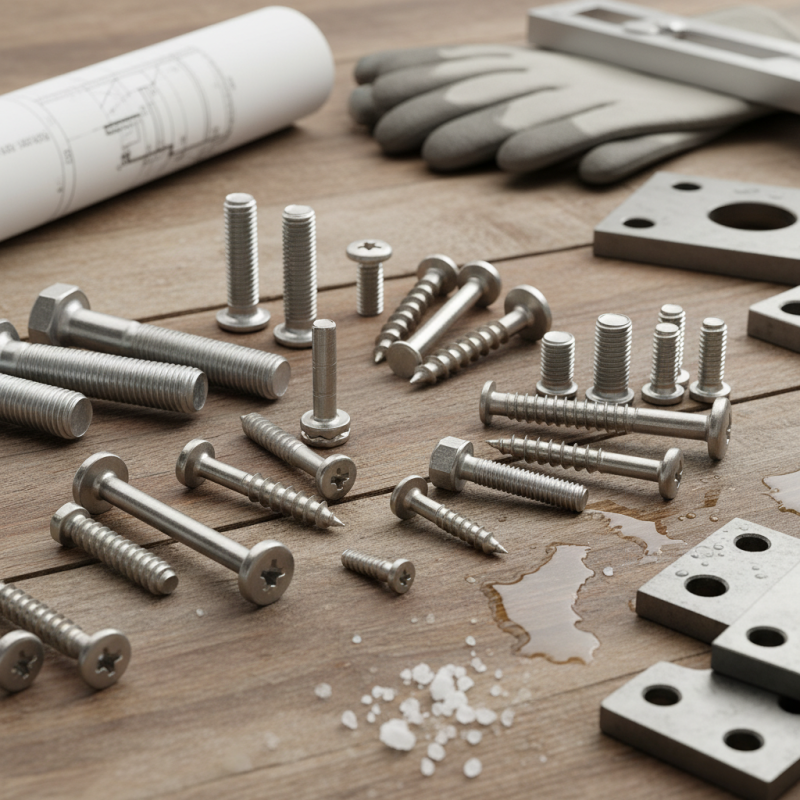
Understanding Different Types of Stainless Screws Available
When selecting stainless screws for your construction project, understanding the various types available is crucial. Stainless steel screws are categorized primarily into three types: austenitic, ferritic, and martensitic. Each type offers unique properties suited for specific applications. For instance, austenitic screws are known for their excellent corrosion resistance, making them ideal for marine environments. Ferritic screws are magnetic and provide moderate corrosion resistance, while martensitic screws can be heat-treated for enhanced strength.
According to industry reports, austenitic screws account for approximately 70% of the market due to their versatility. In contrast, martensitic screws represent around 15%, favored where high strength is essential. Understanding these categories ensures informed decisions tailored to project needs.
Tip: When selecting, consider your environment. If you’re in a coastal area, austenitic screws with a higher nickel content can prevent rust. Also, remember that not all stainless steel is created equal; check the grade, as A2 is commonly used for general applications and A4 is better for high corrosion resistance.
Scrutinize the environmental factors affecting screw performance. Different coatings can enhance lifespan but might affect appearance. An oversight in this choice may lead to premature failure. Always match the screw type with your specific project requirements to avoid complications later.

Types of Stainless Screws and Their Common Applications
Evaluating Corrosion Resistance for Outdoor Applications
When choosing stainless screws for outdoor applications, corrosion resistance is crucial. Outdoor environments expose screws to moisture and varying temperatures. This can lead to rust, weakening the material. Selecting the right screws helps enhance the longevity of your project.
Tip: Consider the grade of stainless steel. Type 304 is general-purpose, while Type 316 offers better corrosion resistance. If you're near saltwater, 316 is often recommended. This material features molybdenum, which increases durability.
Always evaluate the environment where screws will be used. Some areas have high humidity or chemical exposure. Such conditions can accelerate corrosion. Inspecting installed screws periodically is also a good practice. You may identify early signs of wear.
Tip: Keep an eye on the installation method. Using a compatible washer can help distribute stress evenly and reduce corrosion chances. Over time, check for signs of fatigue. This proactive approach can save you from costly repairs down the line.
Selecting the Right Screw Size and Length for Your Project
When selecting the right screw size and length for your project, it’s crucial to consider the material being joined. According to a report by the Fastener Quality Act, improper screw selection can lead to structural failures. Choosing the correct length can ensure proper torque and load-bearing capacity. For example, screws that are too short may not provide adequate hold, while excessively long screws can damage underlying materials.
The diameter of the screw also plays a significant role. A study published by the American Society of Mechanical Engineers shows that the screw's tensile strength is directly related to its diameter. For wood applications, a typical rule is to use screws that are 1.5 to 2 times the thickness of the material being fastened. Yet, this isn’t always perfectly applicable. Variations in density and thickness can lead to unexpected results, requiring adjustments during installation.
Understanding these parameters can make a substantial difference in project outcomes. Keep in mind that some materials may expand or contract, impacting screw performance. Testing different screws in a small section may help identify the best fit, avoiding costly mistakes. Ultimately, attention to detail in screw selection is essential for achieving project durability and integrity.
Choosing Between Standard and Specialty Stainless Screws
Choosing the right type of stainless screws is essential for any project. When considering standard screws, think about their versatility. These screws work well in various applications. They are typically made from 304 stainless steel, which offers decent corrosion resistance. Standard screws can handle many environments, from indoor to light outdoor use.
Specialty stainless screws serve niche needs. They might include screws made from 316 stainless steel, which offers superior corrosion resistance. This is important in marine or highly corrosive environments. Specialty screws may also feature unique designs or threads for specific tasks. Choosing these might be necessary for certain projects, but they can come with a higher cost.
Ensure you assess the requirements of your project before making a decision. Consider factors such as environment, material compatibility, and load requirements. Sometimes, a standard screw might suffice. At other times, a specialty screw is a must-have. It’s a balance of cost versus functionality that should be carefully considered. Each project is unique, and what works for one may not work for another.
Assessing Compatibility with Materials and Fastening Methods
Choosing the right stainless screws requires careful consideration of compatibility with materials and fastening methods. Data indicates that nearly 70% of structural failures in construction projects stem from improper fastener selection. For instance, stainless steel screws work well with wood and plastics but may cause issues with certain metals due to galvanic corrosion.
When selecting screws, always assess the material you're fastening. Screws made from 304 stainless steel are suitable for indoor projects. However, for outdoor applications, or in corrosive environments, 316 stainless steel is recommended. This choice is backed by industry reports showing that 316 stainless steel offers superior corrosion resistance, enhancing longevity.
It's crucial to choose the right fastening method as well. Direct driving can strip softer materials, creating weak points. Pre-drilling can help in preventing this issue. According to a survey of construction professionals, 55% reported that they observed significant project delays due to fastening errors. Understanding the compatibility of screw types with fastening techniques can mitigate risks and lead to a more durable assembly.
How to Choose the Right Stainless Screws for Your Project? - Assessing Compatibility with Materials and Fastening Methods
| Screw Type | Material Compatibility | Typical Applications | Corrosion Resistance | Recommended Fastening Methods |
|---|---|---|---|---|
| 304 Stainless Steel | Wood, Plastic, Mild Steel | Furniture, Outdoor Structures | Good in mild environments | Drill and Drive |
| 316 Stainless Steel | Marine Applications, Chemicals | Boat Manufacturing, Chemical Storage | Excellent, suitable for harsh environments | Socket Hex Drive |
| 410 Stainless Steel | Wood, Plastic | Fasteners in Appliances, Automotive | Fair, less resistant to corrosion | Phillips Drive |
| A2 Stainless Steel | Non-corrosive metals, Wood | Internal and External Applications | Good, residential and commercial use | Torx Drive |
Article Source:
At Premium PSU, we are specialists in designing and manufacturing power conversion systems for the industrial market. Our product range includes high reliability power supplies from 50W to 72kW.
PREMIUM PSU
C/ Dolors Aleu, 19-21, 2nd Floor
08908 – Hospitalet de Llobregat
Barcelona-SPAIN
t.+34 93 223 26 85