
How to Choose the Right DC DC Converter for Your Project?
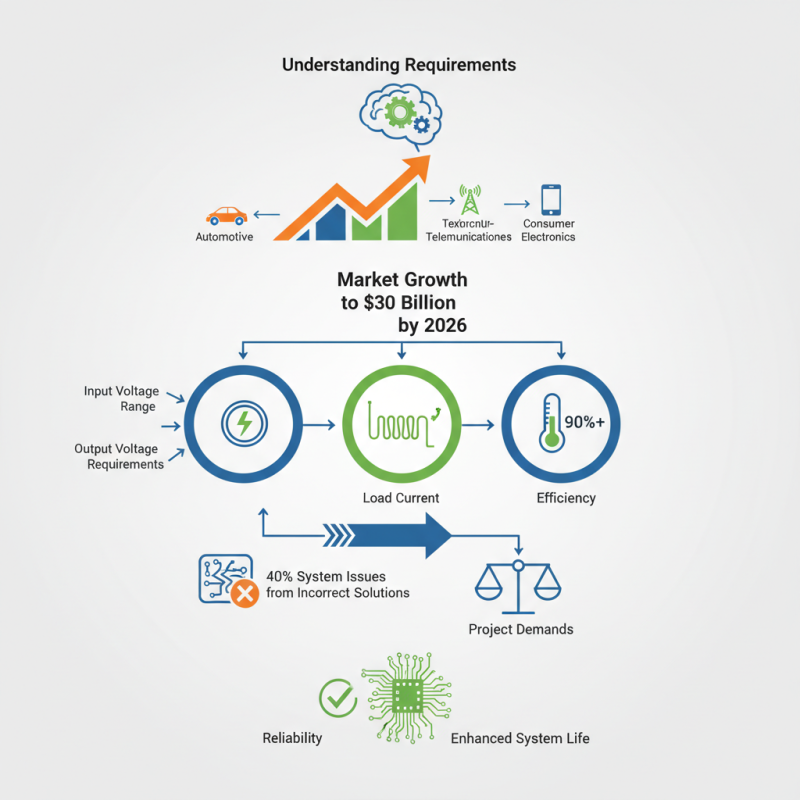
Choosing the right DC DC converter for your project is crucial. The DC DC converter market is expected to grow significantly, reaching $30 billion by 2026. This growth reflects the increasing demand for efficient power conversion in various industries, including automotive, telecommunications, and consumer electronics. A poorly selected converter can lead to system inefficiencies and potential project failures.
Technical specifications are vital when selecting a DC DC converter. Factors like input voltage range, output voltage requirements, and load current can affect performance. For instance, selecting a converter with an inadequate input range could lead to operational failures. Reports indicate that up to 40% of system issues stem from incorrect power conversion solutions.
Understanding your project’s unique requirements is essential. Reflecting on past experiences with converters can provide valuable insights. Many engineers have faced challenges due to improper selection. Considering the nuances of your application can enhance reliability. Aim for converters that offer efficiency above 90% to minimize heat and prolong system life. Balancing specifications with project demands is a critical skill.
Understanding the Basics of DC-DC Converters in Electronic Projects
DC-DC converters are vital in electronic projects. They step up or step down voltage levels, ensuring components receive stable power. Understanding their basics can enhance project reliability.
Different types of DC-DC converters exist, such as buck, boost, and buck-boost converters. Each type serves unique purposes. A buck converter reduces voltage, making it ideal for battery-powered devices. In contrast, a boost converter increases voltage, useful in applications needing higher output.
Choosing the right converter isn’t always straightforward. It involves considering factors like voltage requirements, current capacity, and efficiency. You might find yourself juggling between options. Sometimes, trial and error is part of the process. Testing various converters helps in finding the optimal solution. Remember to assess the thermal performance as well. Overheating can lead to inefficiency or failure.
Key Specifications to Consider When Selecting a DC-DC Converter
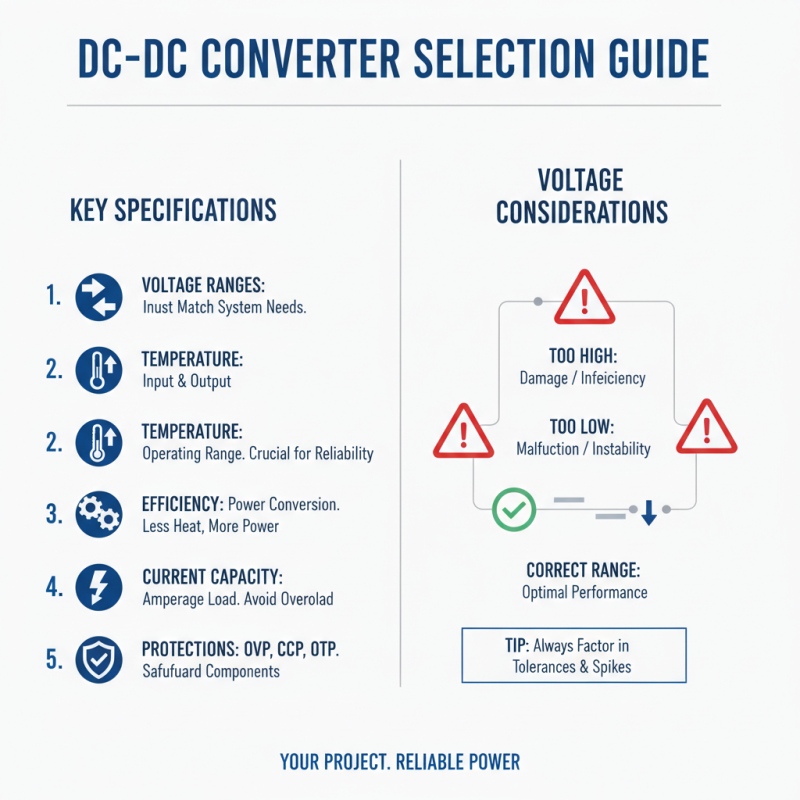
When selecting a DC-DC converter for your project, it's essential to focus on key specifications. First, consider the input and output voltage ranges. The converter needs to handle your specific voltage requirements. If the voltage is too high or too low, it may cause inefficiencies or damage to components.
Next, evaluate the output current capacity. Ensure it meets the demands of your application. Insufficient current can lead to overheating and potential failure. Additionally, look at efficiency ratings. A higher efficiency results in less heat generation and improves reliability.
Another critical factor is ripple voltage. It affects performance in sensitive circuits. Low ripple is crucial for applications involving precision. Lastly, size and footprint matter. A compact design is often needed, especially in tight spaces. Balancing these specifications can be challenging, and there is no one-size-fits-all solution. Reflecting on your project's unique needs is vital for making the right choice.
Comparing Efficiency Ratings: Fixed vs. Adjustable DC-DC Converters
When selecting a DC-DC converter, understanding the efficiency ratings is crucial. Fixed and adjustable converters have different performance characteristics. Fixed converters typically deliver consistent and reliable outputs. This leads to a simpler design and fewer variables. However, you may sacrifice optimal efficiency for specific voltage requirements.
Adjustable converters offer versatility in output voltage. This flexibility allows you to tailor the device for various applications. But with this adaptability comes a potential drop in efficiency. The added complexity can introduce challenges in regulation and stability. Designers may need to spend more time fine-tuning settings. It’s essential to consider the trade-offs.
Deciding between fixed and adjustable converters isn’t straightforward. Assessing your project's specific needs is vital. Efficiency is important, but so are factors like size, weight, and thermal performance. Sometimes, a suboptimal choice can lead to overheating or increased costs. A thorough analysis will ensure you choose the right type for your particular application.
Evaluating Load and Input Voltage Range for Optimal Converter Choice
When selecting a DC-DC converter, assessing your load requirements is crucial. The load determines how much power the converter must deliver. Consider both the continuous and peak load currents. A converter that can handle peak loads ensures stability during sudden demand spikes. Your design may need a safety margin. This margin can help avoid overheating and ensure longevity.
Input voltage range is another vital factor. Identify the lowest and highest voltage levels your application will encounter. A suitable converter must operate efficiently across this range. If your input varies widely, select a model with good line regulation. This feature helps maintain output voltage despite fluctuations.
Inadequate assessment can lead to inefficiencies. If the converter is undersized, it might fail to keep up with your load. Over-specifying can result in unnecessary costs and increased size. Balancing these factors requires thoughtful consideration. A simplified approach could overlook specific project needs, leading to issues down the line. Analyze the requirements thoroughly to find the right match for your project.
How to Choose the Right DC DC Converter for Your Project? - Evaluating Load and Input Voltage Range for Optimal Converter Choice
| Converter Model | Input Voltage Range (V) | Output Voltage (V) | Output Current (A) | Efficiency (%) | Package Type |
|---|---|---|---|---|---|
| DC-DC-1 | 4.5 - 15 | 5 | 3 | 90 | SMD |
| DC-DC-2 | 6 - 20 | 3.3 | 2 | 92 | TO-220 |
| DC-DC-3 | 8 - 30 | 12 | 1.5 | 88 | DIP |
| DC-DC-4 | 10 - 25 | 15 | 3 | 85 | SOT-23 |
| DC-DC-5 | 4 - 12 | 1.8 | 2.5 | 91 | LGA |
Common Applications and Industry Standards for DC-DC Converters
In various industries, DC-DC converters play a vital role. They adapt electrical power to the needs of specific applications. Common uses include
powering telecommunications equipment, consumer electronics, and renewable energy systems.
These converters need to meet industry standards for efficiency and reliability.
Tips for selecting the right converter: Consider power requirements first. Ensure the output voltage aligns
with your device's needs. Look at the input voltage range too. A converter with a wider range can adapt to various conditions.
Another critical aspect is thermal management. Overheating can affect performance. Make sure the converter has adequate cooling features.
Not every device needs a highly efficient model, but understanding your project’s demands is crucial.
In some applications, cost is a significant factor. Cheaper converters may lack essential features.
Always weigh the trade-offs between cost and reliability. Reflecting on these choices can guide you to the best solution for your project.
Related Posts
-
Digital Solutions Tips for Optimizing Your DC DC Converter Performance
-
10 Best DC to DC Converters You Should Consider For Your Next Project
-
Why You Should Choose the Right Power Supply Unit for Your Computer
-
Understanding Buck Converters: The Key to Efficient Power Supply in Modern Electronics
-

10 Essential Tips for Understanding and Using Buck Converters Effectively
-
How to Choose the Right UPS Power System for Your Needs

At Premium PSU, we are specialists in designing and manufacturing power conversion systems for the industrial market. Our product range includes high reliability power supplies from 50W to 72kW.
PREMIUM PSU
C/ Dolors Aleu, 19-21, 2nd Floor
08908 – Hospitalet de Llobregat
Barcelona-SPAIN
t.+34 93 223 26 85