Why Choose a High Voltage DC DC Converter for Your Application?
In today’s rapidly evolving technology landscape, the need for efficient power conversion is paramount. A high voltage DC DC converter is a critical component for many modern applications. These devices enhance performance in systems requiring significant voltage management.
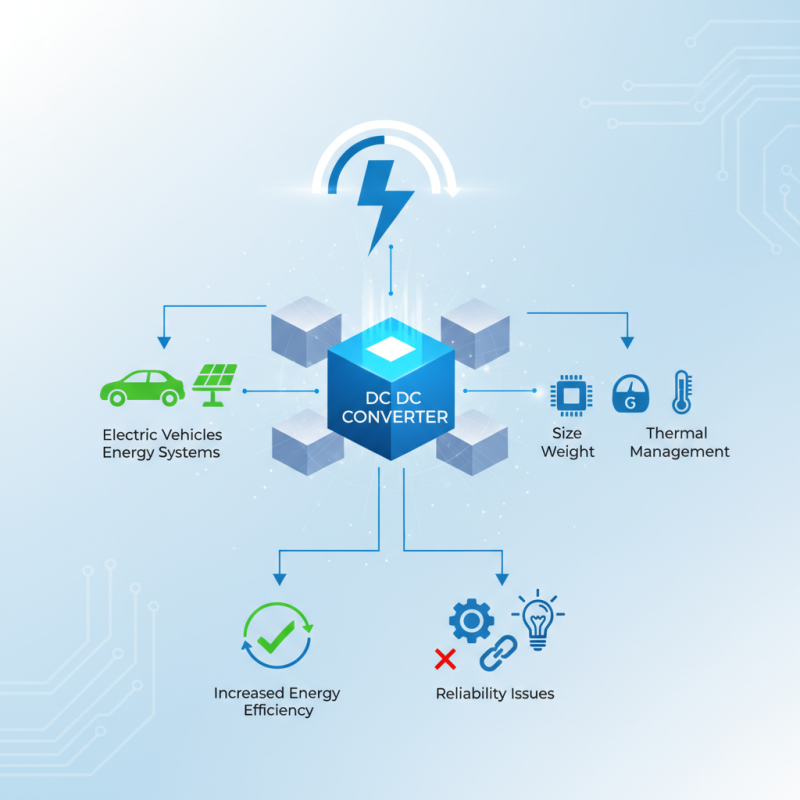
Choosing a high voltage DC DC converter can lead to increased energy efficiency. This is particularly important in electric vehicles and renewable energy systems. Users must consider issues like size, weight, and thermal management of these converters. Every application has unique requirements.
However, selecting the right converter may not be straightforward. There are nuances in voltage ratings and output configurations. Poor choices can lead to system inefficiencies and reliability issues. Therefore, thorough consideration is key to harnessing the full potential of a high voltage DC DC converter.
Understanding High Voltage DC DC Converters and Their Functionality
High voltage DC-DC converters play a crucial role in various applications. They effectively step up or step down voltage levels while maintaining efficiency. This functionality is essential in industries like renewable energy and electric vehicles, where energy management is vital. Such converters help optimize power supply and improve overall system performance.
When choosing a high voltage DC-DC converter, consider the application requirements. Different designs cater to specific needs, like output voltage range and load characteristics. Not every converter is suited for every purpose. It's important to match the converter with your specific demands. Testing different options can help identify the ideal fit.
Tip: Pay attention to thermal management. High voltage systems generate heat. Proper cooling solutions can enhance reliability.
Another factor to consider is efficiency at different loads. Many converters perform well under standard conditions but may struggle under varying load scenarios. Testing across load variations can reveal potential weaknesses.
Tip: Evaluate the total cost of ownership, not just the initial price. A cheaper option might have lower efficiency, leading to higher energy bills in the long run.
Reflect on the unique needs of your application. A well-chosen converter can significantly boost system performance and energy savings.
Key Advantages of High Voltage DC DC Converters in Various Applications
High voltage DC-DC converters are becoming increasingly popular across various sectors. These converters excel in efficiency, often exceeding 90%. This is particularly valuable in data centers, where energy costs are critical. According to a recent report from the International Energy Agency, optimizing power conversion can improve overall system performance. High voltage solutions reduce energy loss during conversion, making them ideal for applications needing consistent and reliable power.
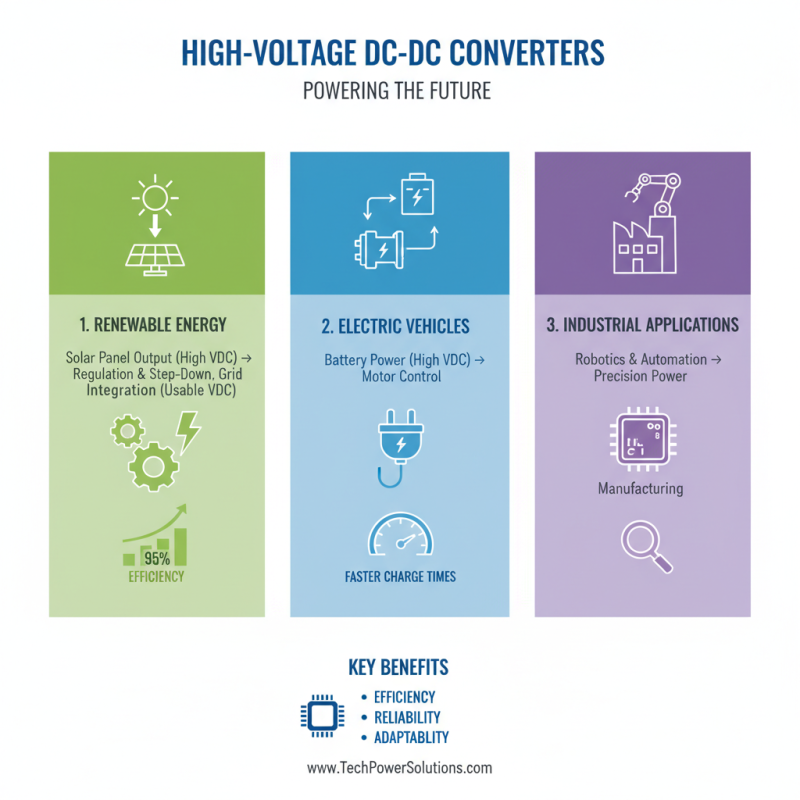
In industries like electric vehicles and renewable energy, high voltage DC-DC converters provide essential functionality. They support the integration of renewable sources with grid infrastructures. The ability to convert different voltage levels efficiently helps to stabilize systems. These converters can also minimize the size of passive components needed, contributing to lightweight designs. Analysts predict the demand for high voltage DC-DC converters will grow by 15% per year over the next five years.
Despite their advantages, challenges remain. Managing heat dissipation is crucial. Effective thermal management must be integrated to avoid performance issues. Additionally, the complexity of high voltage systems can lead to installation difficulties. Proper training and design considerations are essential for optimizing these systems. As the industry evolves, ongoing improvements will address these concerns and enhance converter capabilities.
Why Choose a High Voltage DC DC Converter for Your Application? - Key Advantages of High Voltage DC DC Converters in Various Applications
| Application Area |
Key Advantages |
Typical Voltage Range |
Efficiency (%) |
| Telecommunications |
Improved signal integrity and power distribution |
300V - 750V |
95 |
| Industrial Automation |
Robust performance in harsh conditions |
200V - 600V |
90 |
| Renewable Energy |
Optimal integration with solar and wind systems |
350V - 800V |
97 |
| Electric Vehicles |
High efficiency and compact design |
400V - 800V |
95 |
| Data Centers |
Reduced power loss and improved reliability |
400V - 750V |
94 |
Comparative Analysis: High Voltage DC DC Converters vs. Traditional Solutions
High voltage DC-DC converters offer distinct advantages over traditional solutions. They efficiently transfer power with reduced losses. This is crucial in applications where every watt counts. In contrast, traditional AC-DC converters can struggle with efficiency, especially at higher voltages. Higher efficiencies can lead to less heat generation and lower cooling costs over time.
When comparing both, high voltage DC-DC converters provide greater power density. They occupy less space and can be tailored for specific uses. Traditional solutions often require more components and space, which can lead to increased installation times and complexities. An older design may not meet today’s efficiency standards.
Tip: Consider your space constraints when selecting a converter. A compact option may work better in tight environments.
While high voltage options shine in performance, they may come with higher initial costs. The complexity of integration can pose challenges. Careful evaluation of your application needs is essential.
Tip: Conduct a thorough analysis of power requirements before making choices. This prevents over- or under-specification.
High voltage DC-DC converters can be more straightforward to maintain. Fewer components often mean less potential for failure. Traditional setups can become a headache due to their complexity. Nonetheless, the right choice should align with both current and future needs.
Factors to Consider When Selecting a High Voltage DC DC Converter
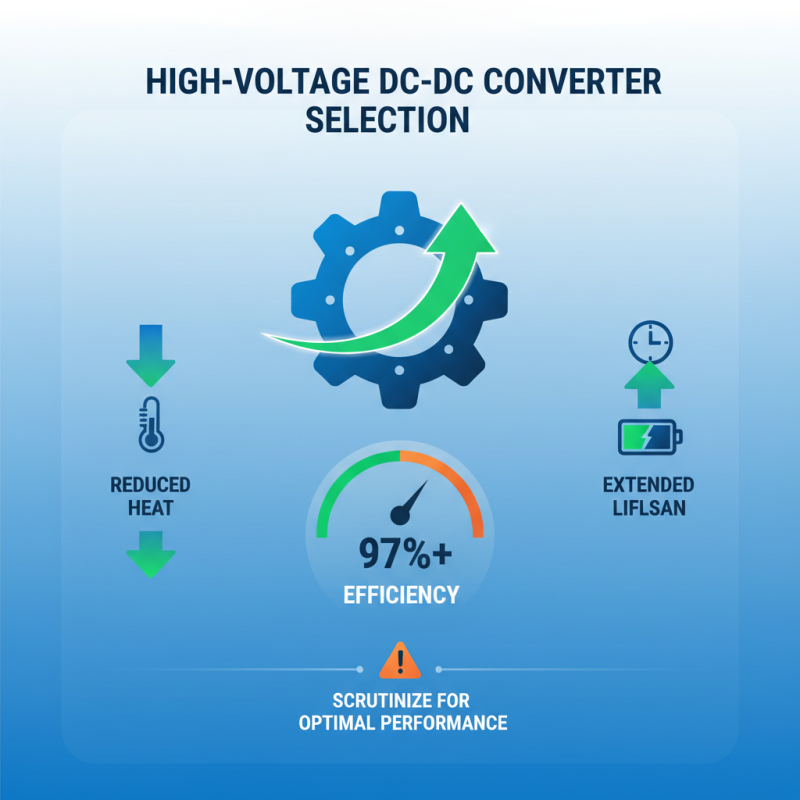
When selecting a high voltage DC-DC converter, several factors are crucial. Efficiency is one of the top considerations. According to a recent industry report, high-efficiency converters can achieve over 97% efficiency in certain applications. This not only reduces energy waste but also lowers heat generation, which can prolong the lifespan of the device. Not all converters reach this level, so scrutiny is required.
Another key factor is the output voltage range. Some applications demand varying voltage levels, which means flexibility is essential. A converter that can handle a wide range of output voltages will be more versatile, accommodating future changes in system requirements. However, not all converters provide this adaptability. Thus, it's important to analyze your current and potential future needs.
Thermal management is also a critical consideration. Effective heat dissipation ensures stable operation. A converter with inadequate thermal management may fail during peak loads. Past studies have shown that thermal issues account for nearly 30% of converter failures in the field. It’s clear that while efficiency and voltage flexibility are important, overlooking thermal management can lead to serious operational problems. Careful evaluation is necessary to mitigate these risks.