Best Switching Power Supply Options for Every Application?
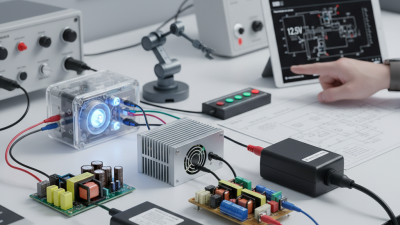
The demand for efficient and reliable power sources is greater than ever. The global switching power supply market is projected to reach over $30 billion by 2025, driven by increasing needs in consumer electronics and industrial applications. Switching power supplies, known for their compact size and energy efficiency, play a critical role in powering various devices. Their ability to convert voltages with minimal energy loss makes them essential in modern technology.
However, not all switching power supplies are created equal. Selecting the right option can be a challenge. Different applications require specific features, such as voltage regulation and thermal performance. A poorly chosen power supply can lead to system inefficiencies, increased heat, or even equipment failure. Understanding these factors is crucial for engineers and designers alike.
As technologies evolve, so do the demands on power supplies. Innovations such as adaptive power management and improved materials are emerging. Yet, many individuals still grapple with making informed choices. With numerous options available, one must consider performance, price, and reliability carefully. The landscape of switching power supplies is diverse, and navigating it can feel overwhelming.
Top Characteristics to Consider When Choosing a Switching Power Supply
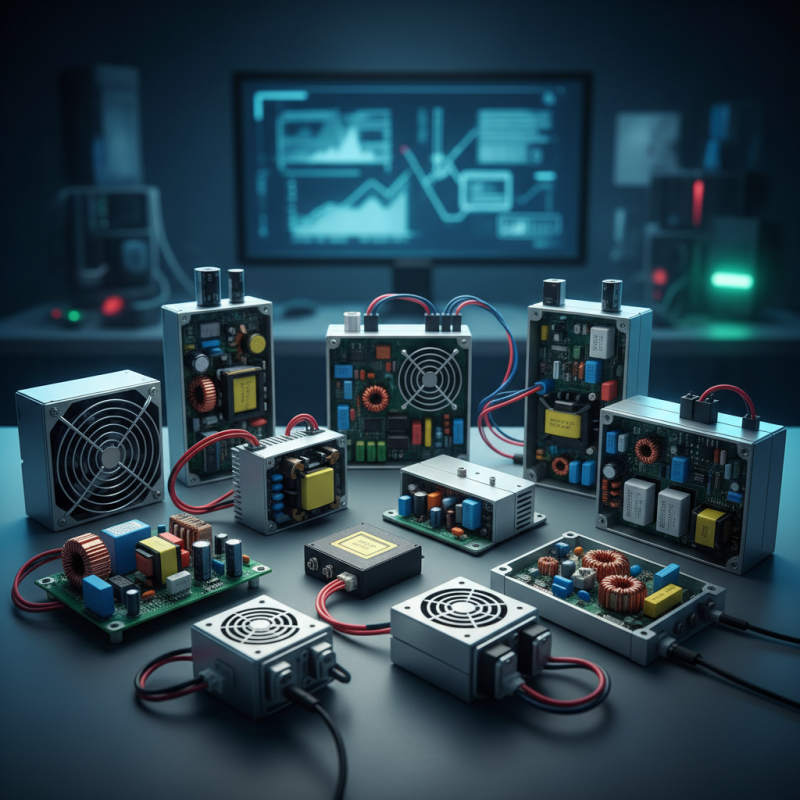
Choosing a switching power supply involves several key characteristics. Efficiency is crucial. A highly efficient power supply reduces energy waste. Look for units that exceed 80% efficiency. This can lead to long-term savings and lower heat output. Heat management is vital. Excessive heat can damage components. Consider units with built-in cooling systems or fans.
Another important aspect is voltage regulation. Fluctuating voltage can harm sensitive electronics. A reliable power supply maintains a steady voltage output. Check specifications for load and no-load regulation. Sizing is often overlooked. A power supply should match your power needs. Under-sizing can lead to failure. Over-sizing may waste energy. Measure your requirements carefully.
Connector types must also fit your application. Different devices use various connectors. Ensure compatibility to prevent frustrating mismatches. Noise reduction features are beneficial too. Electromagnetic interference can disrupt operation. Look for power supplies with noise filtering options. Reflect on your choices. Each characteristic impacts performance and longevity. Balancing these factors can lead to the best implementation for your needs.
Common Applications for Switching Power Supplies in Various Industries
Switching power supplies are essential in various industries. They convert electrical energy efficiently and are critical for modern electronics. In the healthcare sector, for example, switching power supplies ensure accurate medical devices. A recent study reveals that over 70% of hospitals now rely on these systems for diagnostic equipment. Their reliability directly impacts patient care.
The telecommunications industry also heavily utilizes switching power supplies. With the ever-growing demand for connectivity, efficient power distribution is crucial. Reports indicate that more than 60% of telecommunications equipment employs these power converters. However, this dependence poses challenges. Power supply failures can disrupt communication networks, leading to significant losses.
In the automotive industry, the shift towards electric vehicles increases the role of switching power supplies. These supplies manage components like battery chargers. A report notes that electric vehicle adoption could exceed 30% by 2030. Yet, the technology needs improvement. Many power supplies struggle with heat dissipation, which reduces overall efficiency. The push for innovation remains critical in addressing these issues.
Best Switching Power Supply Options for Every Application
| Application | Voltage Output | Power Rating | Efficiency Rating | Typical Use Case |
|---|---|---|---|---|
| Consumer Electronics | 5V, 12V | 30W - 200W | 85% - 90% | Televisions, gaming consoles |
| Industrial Equipment | 24V, 48V | 100W - 1kW | 90% - 95% | Motors, robotics |
| Telecommunications | 48V | 300W - 2kW | 90% - 94% | Data centers, networking equipment |
| Medical Devices | 12V, 24V | 50W - 500W | 85% - 92% | Patient monitoring, imaging machines |
| Renewable Energy | 12V, 24V, 48V | 500W - 5kW | 90% - 95% | Solar inverters, wind turbines |
Comparing Efficiency Ratings of Different Switching Power Supply Models
Selecting the right switching power supply can be challenging. Efficiency is often a top concern. Different models boast varying efficiency ratings that can significantly impact performance. Often, a higher rating indicates better power conversion. However, not all high-efficiency options are suitable for every application.
For instance, a power supply rated at 90% efficiency may seem superior. Yet, it might not perform well under load. In contrast, a model with 80% efficiency might provide stable power across various conditions. It's essential to consider the operating environment and application needs. Some setups require flexibility, while others need reliability under continuous use. Balancing these factors is crucial.
In evaluating efficiency ratings, users should look at the power supply's full-load and no-load performance. Not all manufacturers present this data transparently. Even minor discrepancies in these ratings can lead to significant energy losses over time. It’s important to scrutinize the specifications closely. A bit of research here can lead to a more informed choice. The right power supply can lead to substantial energy savings and longer equipment life.
Safety Features and Compliance Standards in Switching Power Supplies
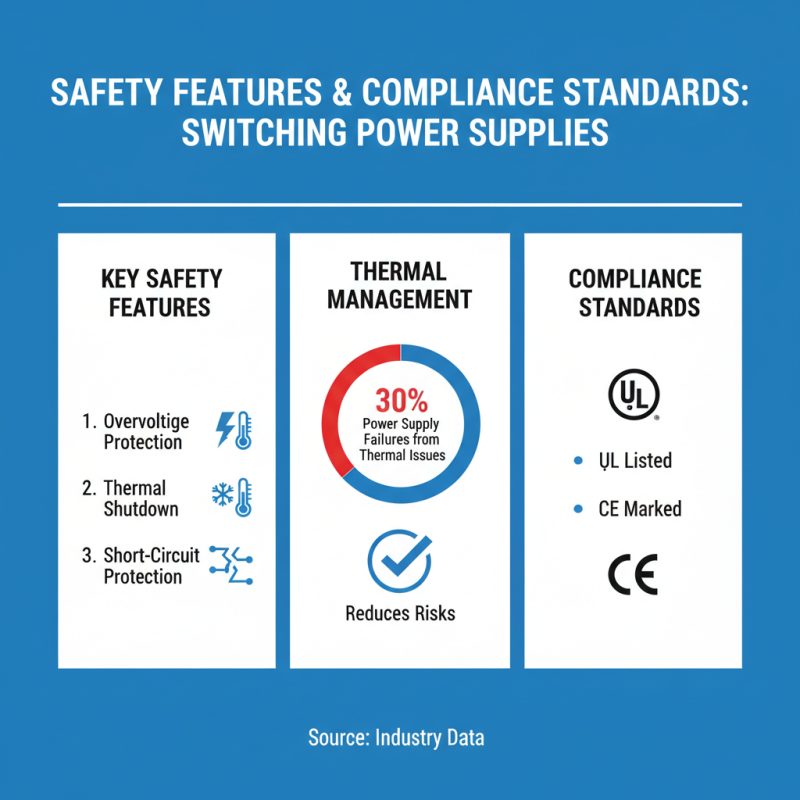
When considering switching power supplies, safety features are paramount. Overvoltage protection, thermal shutdown, and short-circuit protection are critical components. Industry data indicates that up to 30% of power supply failures result from thermal issues. A well-implemented thermal management system can reduce such risks significantly.
Compliance with international standards is another essential factor. Many regions mandate adherence to standards like UL, IEC, and CE. Reports suggest that nearly 70% of faults in power supplies stem from non-compliance. Manufacturers must aim for better quality control to ensure safety. Moreover, the testing process should be rigorous. Every unit must not only meet but exceed baseline requirements.
Despite advancements, challenges remain. Some designs overlook user safety features, leading to potential hazards. The evolving landscape of technology demands continuous improvement in safety mechanisms. It’s crucial to remain vigilant and prioritize safety while exploring new innovations. As the industry grows, the need for robust safety measures will only become more pressing.
Cost Considerations for Selecting the Right Switching Power Supply
When selecting a switching power supply, cost considerations play a vital role. An inexpensive option may seem tempting. However, it's essential to assess the long-term value. Cheaper supplies often lead to performance issues or shorter lifespans. This can result in higher replacement costs.
Tips: Always analyze the total cost of ownership. A slightly more expensive unit might save you money in the long run. Look for efficiency ratings and warranties. These elements can signal better reliability.
Moreover, it is crucial to evaluate specific application needs. Not all power supplies fit every scenario. Sometimes, a custom solution is necessary. This might come at a higher initial cost but can boost performance. One must weigh these factors carefully.
Tips: Be open to consulting with experts. Their insights may reveal options you hadn’t considered. Understand the balance between price and quality to make informed decisions. In this way, you ensure optimal performance without overspending.
Related Posts
-
Top 2025 Guide to Choosing the Best AC DC Power Supply for Your Needs
-
Addressing Common Issues with DC Supply Systems: A Comprehensive Guide
-
Unlocking Efficiency: How Switching Power Supplies Transform Modern Electronics
-

Top 2025 Guide to Choosing the Right AC DC Power Supply for Your Needs
-
How to Choose the Right PSU for Your Computer to Maximize Performance and Efficiency
-

Exploring the Future of AC Power Supply: Trends, Innovations, and Market Growth Projections

At Premium PSU, we are specialists in designing and manufacturing power conversion systems for the industrial market. Our product range includes high reliability power supplies from 50W to 72kW.
PREMIUM PSU
C/ Dolors Aleu, 19-21, 2nd Floor
08908 – Hospitalet de Llobregat
Barcelona-SPAIN
t.+34 93 223 26 85