What is an AC to DC Power Converter and How Does It Work?
In today's technological landscape, the importance of AC to DC power converters cannot be overstated. These devices play a vital role in the functioning of many electronic systems. Dr. Emily Carter, an expert in electrical engineering, emphasizes their significance: “AC to DC power converters are crucial for any device that requires stable and efficient power.”
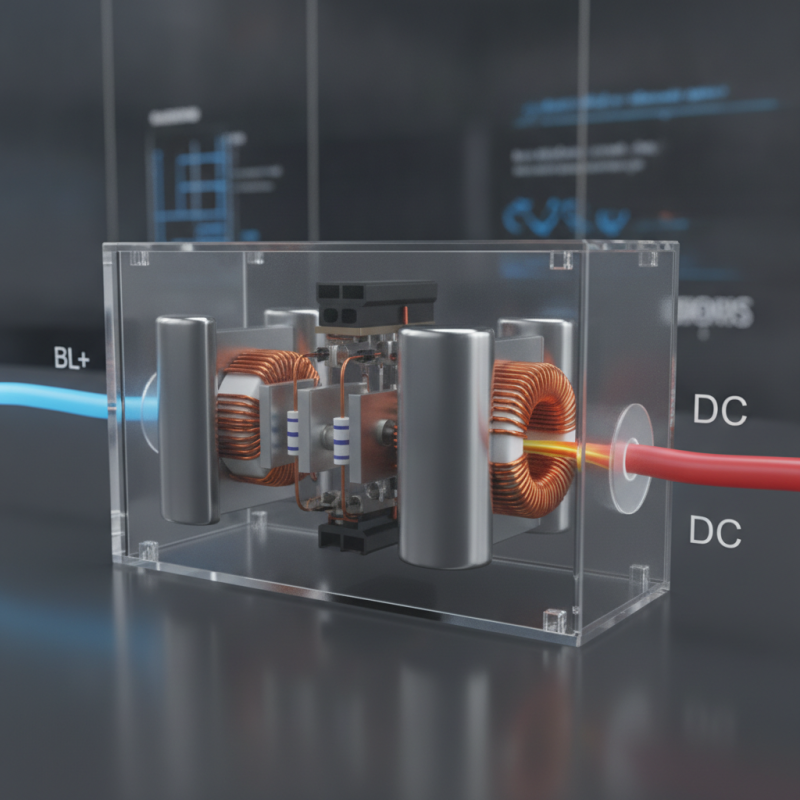
Understanding how an AC to DC power converter works helps illustrate its importance. These converters transform alternating current (AC) into direct current (DC), which most electronic devices need to operate. Often, the process involves rectification, smoothing, and regulation to ensure a clean, stable output.
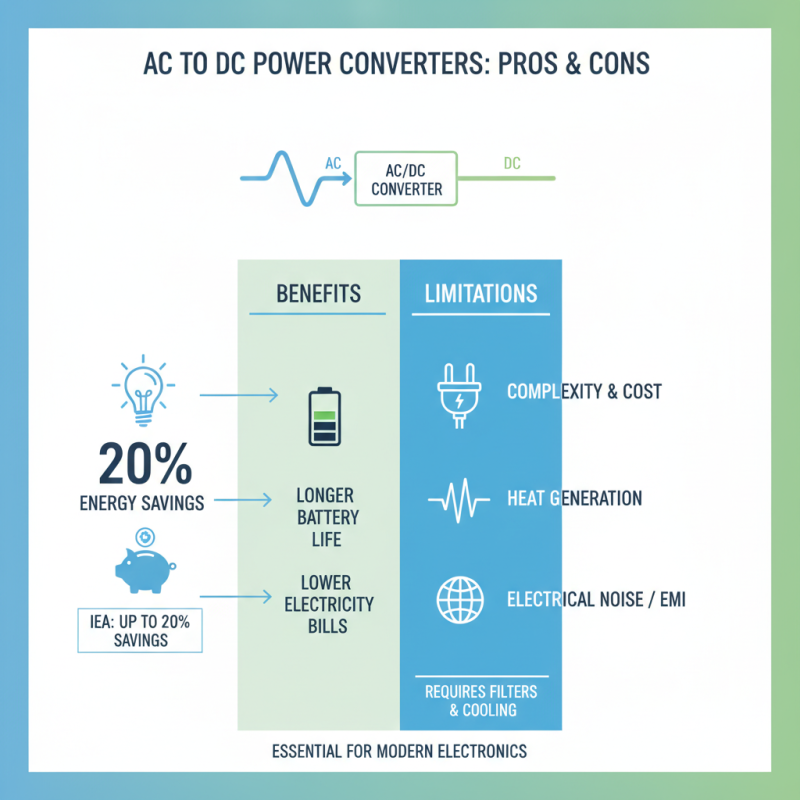
Yet, it’s worth noting that the reliability of these converters can vary. Some may face challenges with efficiency, heat generation, or compatibility issues with different devices. Recent advancements have improved performance, but there is still room for growth. Continuous innovation is essential for enhancing the functionality of AC to DC power converters, ensuring they meet the demands of modern technology.
What Is an AC to DC Power Converter? Overview and Definition
An AC to DC power converter is essential in modern technology. It transforms alternating current (AC) from electrical outlets into direct current (DC), which powers most electronic devices. Such converters are found in chargers, power supplies, and many household applications. According to a recent market report, the global power converter market is projected to reach $30 billion by 2026. This growth highlights the increasing reliance on DC-powered devices.
While AC to DC converters simplify power distribution, they can introduce complexity. High-voltage systems may require additional safety measures. Users must also consider compatibility with devices. Not all converters are suitable for every application. Understanding specific requirements enhances reliability and performance. The journey towards more efficient converters continues, driven by the demand for sustainable technology.
Key Components of AC to DC Power Converters Explained
AC to DC power converters are essential devices used in various electronic applications. These converters change alternating current (AC) into direct current (DC). Understanding the key components can help troubleshoot or even build your own converter.
The transformer is the primary element. It adjusts voltage levels, ensuring the output is appropriate for the load. Next, the rectifier changes the AC current into DC. This process can employ diodes, which allow current to flow in one direction only. Following this, the filter smoothens the output. Capacitors are often used here to reduce voltage fluctuations.
Tips: Always use components rated for the voltage you expect. This prevents damage and ensures safety. When building your converter, recheck connections. Loose wires can lead to faulty performance or hazards.
A voltage regulator can also be critical. It stabilizes the output, providing consistent power. This is particularly important for sensitive electronics. Experimenting with different components can yield various results. Understanding each part’s role enhances your skills in power management.
AC to DC Power Converter Efficiency Analysis
How AC to DC Power Converters Function: The Rectification Process
An AC to DC power converter plays a crucial role in electronic devices. It transforms alternating current (AC) into direct current (DC). This transformation is essential because most electronic circuits require DC to function properly. The core process is called rectification.
Rectification involves changing AC, which flows in both directions, into DC, which flows in one direction. This process typically uses diodes that allow current to pass in one way while blocking the other. There are two main types of rectification: half-wave and full-wave. Half-wave rectification only utilizes one half of the AC cycle, while full-wave rectification uses both halves, providing a smoother DC output.
Tips: Ensure your power converter's ratings match your device needs. Overloading can lead to failures. Regularly check for wear on components; timely maintenance can prevent more extensive damage.
The conversion process might seem straightforward, but it has hidden complexities. For instance, ripple voltage is a common issue in rectification. It refers to the small variations in voltage after rectification. These variations can affect appliance performance. Filtering techniques are often needed to minimize this ripple, which can complicate design.
What is an AC to DC Power Converter and How Does It Work? - How AC to DC Power Converters Function: The Rectification Process
| Parameters | Description | Typical Values |
|---|---|---|
| Input Voltage | The voltage supplied to the AC to DC converter. | 100V - 240V AC |
| Output Voltage | The DC voltage after conversion. | 5V - 24V DC |
| Conversion Efficiency | Percentage of input power converted to output power. | 80% - 95% |
| Ripple Voltage | Fluctuations in the output voltage after rectification. | Less than 100 mV |
| Typical Applications | Common uses of AC to DC converters. | Power adapters, LED power supplies, battery chargers |
Efficiency Metrics: Understanding Power Conversion Efficiency Ratings
Power conversion efficiency is crucial in evaluating AC to DC power converters. This efficiency indicates how well a converter transforms incoming alternating current into usable direct current. Higher efficiency means reduced power loss, which is essential for cost-saving and energy conservation.
Various metrics measure this efficiency. The most common is the percentage of input power converted into output power. A 90% efficiency rating suggests that 90% of the power is effectively used. The remaining 10% could be lost as heat or noise. In practice, real-world conditions often lead to inefficiencies. Factors like temperature fluctuations or load variations impact performance.
Understanding these efficiency ratings can guide users in selecting the right power converters. It’s essential to consider the operational environment and expected load conditions. Testing under diverse scenarios can provide a more accurate picture of performance. Striving for optimal efficiency remains an ongoing challenge in power electronics.
Applications and Use Cases of AC to DC Power Converters in Industry
AC to DC power converters play a critical role in many industrial applications. They are essential for transforming alternating current (AC) into direct current (DC), which is needed for various electronic devices. According to a recent industry report, the demand for such converters is projected to reach $10 billion by 2026. This growth highlights the increasing reliance on electronic systems in manufacturing, telecommunications, and consumer electronics.
In industrial settings, AC to DC converters are widely used in equipment like programmable logic controllers (PLCs) and robotics. These devices require stable DC power for optimal performance. For instance, an automated manufacturing line can operate efficiently with these converters, ensuring consistent voltage levels. However, the efficiency of converters can vary, leading to potential energy loss. Reports indicate that up to 15% of energy may be wasted during conversion, prompting the need for innovation in converter technology.
The automotive industry also benefits significantly from AC to DC converters. Electric vehicles use them to charge batteries from AC power sources. The rapid expansion of electric vehicle infrastructure demonstrates the growing necessity for these converters. Yet, manufacturers still face challenges in scalability and cost-effectiveness. Addressing these issues is crucial for advancing technology in both the automotive and industrial spheres.
Related Posts
-
Unlocking Efficiency: How Switching Power Supplies Transform Modern Electronics
-
Why You Should Choose an AC to DC Converter for Your Electronic Applications
-
Top AC to DC Converter Tips for Optimal Performance?
-
What is an AC to DC Converter and How Does it Work?
-
10 Essential Tips for Choosing the Right Switching Power Supply
-
How to Choose the Right DC Converter for Your Project Needs
At Premium PSU, we are specialists in designing and manufacturing power conversion systems for the industrial market. Our product range includes high reliability power supplies from 50W to 72kW.
PREMIUM PSU
C/ Dolors Aleu, 19-21, 2nd Floor
08908 – Hospitalet de Llobregat
Barcelona-SPAIN
t.+34 93 223 26 85