What is AC Power Supply and How Does It Work?
The concept of AC power supply is vital in modern electrical systems. Dr. Emily Carter, an expert in electrical engineering, states, "An AC power supply is the backbone of our electrical grid." This highlights its significance. When we plug in our devices, we depend on AC power supply to function efficiently.
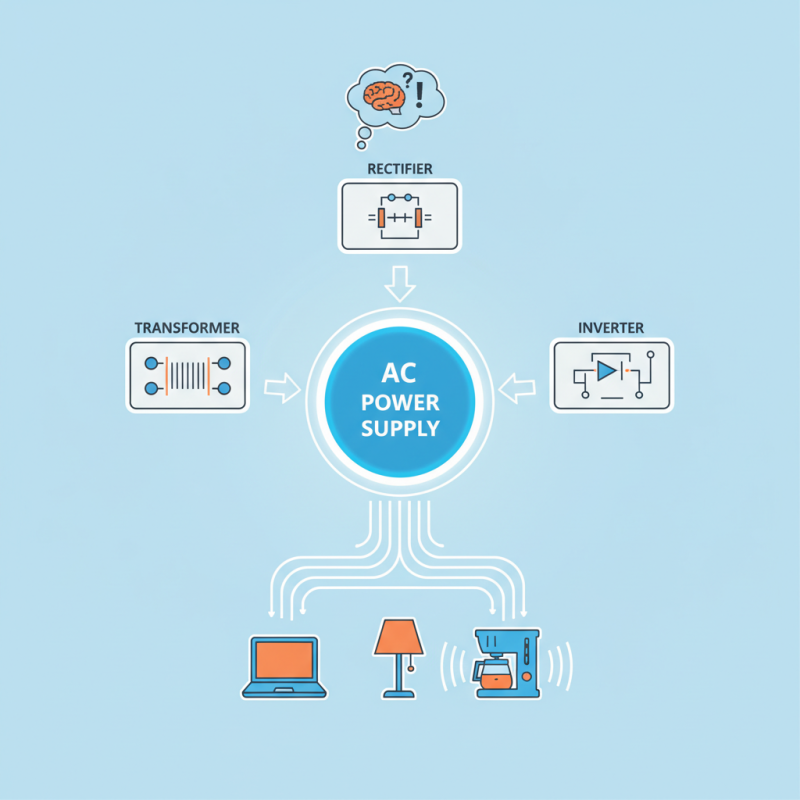
Understanding how AC power supply works is essential. It transforms energy for various applications. This process might seem straightforward, yet complexities exist. The technical workings can be challenging to grasp. Transformers, rectifiers, and inverters play crucial roles in this setup.
However, we often take AC power supply for granted. Many don’t realize its impact on daily life. When the power goes out, the reliance on this supply becomes evident. Reflecting on our dependence can spark deeper appreciation. It's not just about getting power; it's about understanding this essential system.
Understanding AC Power Supply: Definition and Basics
AC power supply is a fundamental aspect of modern electrical systems. It provides a consistent voltage, allowing devices to operate efficiently. AC stands for alternating current, which alternates direction periodically. This contrasts with direct current (DC), which flows in one direction. According to the U.S. Energy Information Administration, about 90% of electricity generated in the United States is in AC form.
Understanding the basics of AC power is crucial. AC power systems are commonly used in households and industries. The standard frequency in North America is 60 Hz. In Europe, it typically runs at 50 Hz. These frequencies directly affect how devices perform. For instance, incorrect frequency can lead to overheating and reduced lifespan of electric motors. A global report by the International Energy Agency highlighted that improper voltage management accounts for 30% of energy losses in distribution systems.
Numerous factors influence AC power supply efficiency. Power factor, which measures how effectively electrical power is being converted into useful work output, often falls below ideal levels. Industry studies suggest that improving power factor can enhance energy efficiency by 5-15%. These variances show the importance of monitoring performance closely. Failure to address these issues can lead to increased costs and wasted energy. Understanding these basics helps to optimize systems effectively.
What is AC Power Supply and How Does It Work?
| Component | Description | Function |
|---|---|---|
| Transformer | Device that changes AC voltage levels | Steps up or steps down voltage |
| Rectifier | Converts AC to DC | Provides direct current from an AC source |
| Inverter | Converts DC back to AC | Used in renewable energy systems |
| Filter | Removes ripple from DC output | Ensures a smooth DC supply |
| Voltage Regulator | Maintains fixed output voltage | Ensures stable power delivery |
The Principles of Alternating Current in Power Supply Systems
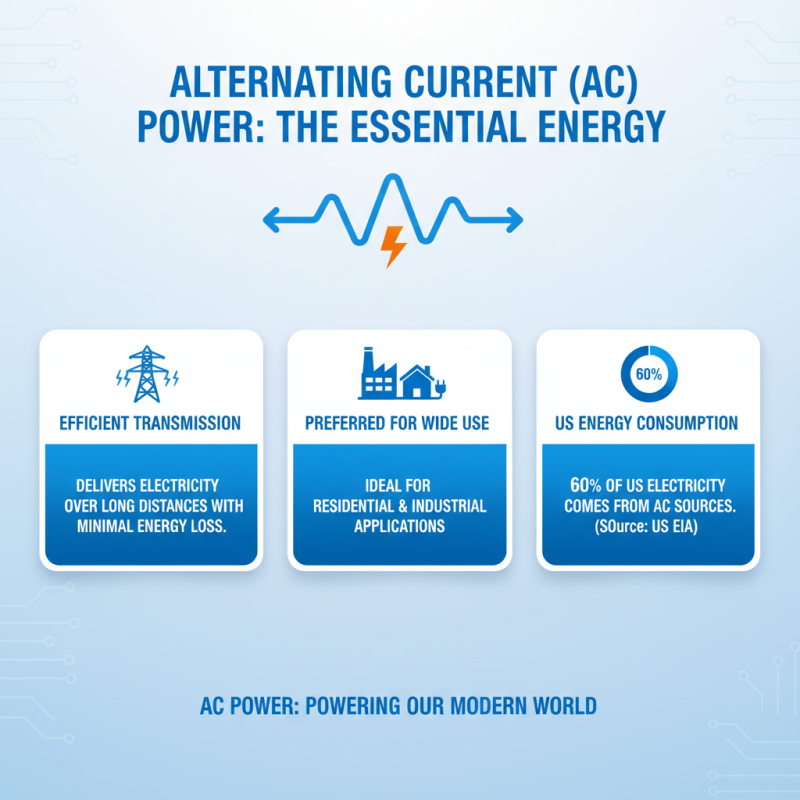
Alternating Current (AC) power supply is vital in today’s energy landscape. AC power systems use alternating current to deliver electricity efficiently over long distances. This method of power delivery reduces energy loss, making it preferred for residential and industrial use. According to the U.S. Energy Information Administration, about 60% of electricity consumed in the U.S. comes from AC sources.
The principles behind AC include its ability to change direction periodically. This oscillation allows it to transform easily between voltage levels. Transformers play a significant role in this process, adjusting voltage for efficient transmission. Reports demonstrate that AC systems can transport power at high voltages, minimizing losses during transit. This efficiency is crucial as demand continues to rise globally.
Tips: When working with AC systems, always prioritize safety. Use insulated tools and be aware of electrical ratings. Ensure your devices are compatible with AC supply.
Challenges in AC systems exist. Variability in current and voltage can lead to fluctuations. This unpredictability may affect performance, especially in sensitive equipment. Regular monitoring helps manage these issues, ensuring stable power supply. Understanding these principles enhances your ability to optimize AC systems effectively.
Components of AC Power Supply: Key Elements Explained
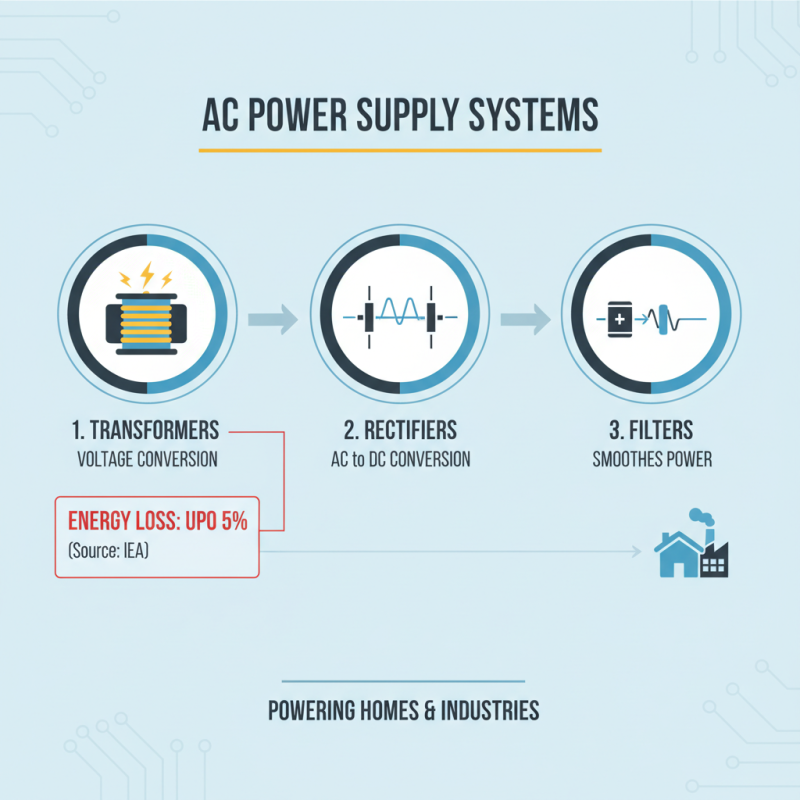
AC power supply systems are essential in everyday life, powering homes and industries. The primary components include transformers, rectifiers, and filters. Transformers are crucial for voltage conversion. They adjust high voltage from transmission lines to safer levels for consumer use. A report from the International Energy Agency states that transformers can lose up to 5% of energy during conversion. This energy loss is significant but often overlooked.
Rectifiers play a vital role in converting AC to DC. This process is important for most electronic devices. Research indicates that the efficiency of rectifiers can vary widely, impacting overall system performance. Poorly designed rectifiers can introduce ripple voltage, affecting device functionality. Inadequate filtering can also lead to unstable power supply, causing devices to malfunction.
Filters smooth the output from rectifiers, ensuring a steady DC voltage. However, not all filters operate with the same efficiency. Some may struggle in certain frequency ranges, leading to power quality issues. A study from the IEEE suggests that common mode noise in power supplies can affect sensitive equipment. Engineers must continuously assess and redesign components to minimize these challenges. The complexity of ensuring reliable AC power supply is both daunting and vital.
How AC Power Supply Converts and Regulates Electric Energy
AC power supply plays a vital role in converting and regulating electric energy. It changes
alternating current (AC) from the power grid into usable electricity for various devices. The process involves rectification,
filtering, and regulation. Rectification converts AC to direct current (DC). This step is crucial since many devices require
DC to operate efficiently.
According to a report by the International Energy Agency, more than 80%
of global electricity is generated from AC sources. This highlights the importance of effective conversion methods. Filtering removes unwanted
fluctuations from the output, resulting in a smoother voltage supply. Surprisingly, not all systems achieve perfect regulation. Inconsistent
voltage levels can lead to equipment damage or inefficiencies.
The regulation stage ensures the output remains stable despite input variations. Many power supplies struggle with rapid
fluctuations or overload conditions. The average user may not realize how often their devices face these challenges. Maintaining
optimized performance requires ongoing research and development. Striving for better
designs can minimize waste and improve energy utilization. The future of AC power supply hinges on innovation and efficiency.
Common Applications and Benefits of AC Power Supply Systems
AC power supply systems are widely used in both residential and commercial settings. They convert electrical energy from sources, like power plants, into a usable form. This allows appliances and devices to function efficiently. One major application is in household electricity. Lights, refrigerators, and televisions all rely on AC power.
Beyond homes, AC power is crucial in industries. Machinery often runs on AC, enabling smoother operations. Factories depend on it for assembly lines, heating, and cooling systems. Hospitals also need reliable AC power for life-saving equipment. Investment in these systems leads to different benefits, including durability and cost-effectiveness.
Tips: Ensure proper grounding of AC devices. This helps prevent electrical shocks. Regularly inspect cables to avoid potential hazards. Also, consider energy-efficient appliances. They can reduce energy consumption significantly, saving money long-term. Balancing the demand and supply of AC power remains a challenge. Energy loss occurs during transmission. Small adjustments can lead to significant improvements.
AC Power Supply Applications
The bar chart above illustrates the distribution of AC power supply applications across various sectors including residential, commercial, and industrial fields. This provides a visual representation of how AC power is utilized in different environments.
Related Posts
-
Understanding AC Power Supply: The Backbone of Modern Electronics Explained Simply
-

Exploring the Future of AC Power Supply: Trends, Innovations, and Market Growth Projections
-
Maximize Efficiency with These Digital Strategies for Your Programmable Power Supply Usage
-

Why Do You Need an AC to DC Converter for Your Devices?
-

2025 How to Choose the Best Power Inverter for Your Needs: A Complete Guide
-
How to Select the Right AC to DC Converter for Your Specific Needs

At Premium PSU, we are specialists in designing and manufacturing power conversion systems for the industrial market. Our product range includes high reliability power supplies from 50W to 72kW.
PREMIUM PSU
C/ Dolors Aleu, 19-21, 2nd Floor
08908 – Hospitalet de Llobregat
Barcelona-SPAIN
t.+34 93 223 26 85